Is There a U.S. Chokepoint Doctrine Emerging? From Hormuz, Kharg Island to Panama
Chaos, or a pattern with a name nobody has said aloud?
· 8 min read · 1 comments
Infinite Horizons · Signal Stack · Ray Ferguson · Cartagena, Spain · 19 July 2026
Chaos, or a pattern with a name nobody has said aloud?
This has been the most eventful stretch of this war since the ceasefire first properly collapsed about two weeks ago, and the temptation is to cover it as a list, a toll announced and reversed, strikes and counter-strikes, a primetime address that barely mentioned the war it was supposedly about.
That would be reporting, not robust analysis.
The more useful task this morning is to find the thread running underneath all of it, and there is one, stated plainly by the people making these decisions, not inferred by outside observers.
The line that explains the rest
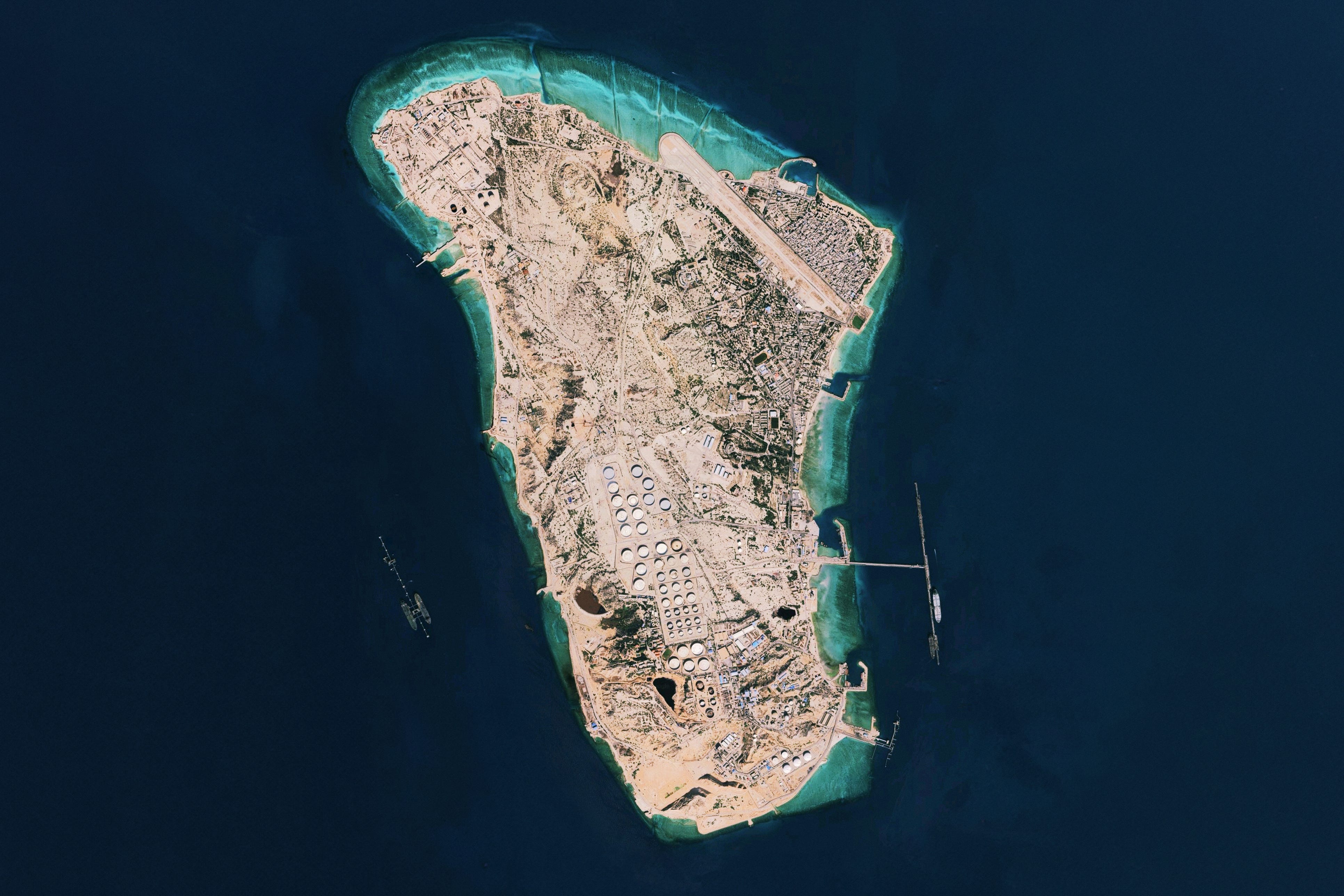
Asked about seizing Kharg Island, the terminal handling ninety per cent of Iran’s oil exports, Trump said the United States would assume total control of the country’s oil and gas markets, comparing it to Venezuela, where he said the same approach was working out brilliantly for both countries.
Set that next to the 20% toll he announced and reversed within a day, and next to his framing of the naval blockade as America becoming Hormuz’s paid guardian.
The pattern underneath all three is the same: shipping security is the public language, and physical or financial control over a resource chokepoint is the instrument, with the specific justification changing case by case while the underlying mechanism does not.
This is not new territory for this administration. Panama shows the same instinct at work albeit through entirely peaceful means.
Since returning to office, Trump has repeatedly raised the question of the Panama Canal’s control, framed through a revived Monroe Doctrine treating the Americas as territory where outside powers, understood to mean China, are unwelcome.
Digging deeper, his administration launched a string of Section 232 national security investigations across critical minerals, semiconductors and shipbuilding. The same habit is visible here: identify the dependency, call it national security, then move state power onto the point of leverage.
Panama’s Supreme Court ruled that the Panama Ports Company’s contract, held by Hong Kong’s CK Hutchison since 1996, was unconstitutional, and Panama has said it will rebid the Balboa and Cristobal port operations later this year.
Panama exited China’s Belt and Road Initiative. Panamanian officials say rising inspections and detentions of Panama-flagged vessels at Chinese ports, from 91 in March to 136 in April, stem directly from the court ruling, with no sign of stopping.
Treasury Secretary Bessent has publicly described his own approach to economic statecraft as standing in the tradition of Alexander Hamilton, treating economic strength and national security as the same project.
Defense Secretary Hegseth and Under Secretary Colby have separately set out geoeconomic manoeuvring combined with expanded military capability as the administration’s own stated strategy for the Indo-Pacific.
Read alongside Panama, Hormuz, and Kharg Island, that stated strategy is exactly what is now visible in two countries through three distinct methods, a toll, an invasion threat, and legal pressure, the administration’s own declared approach doing what it said it would do.
Kharg Island looks like the same pattern attempted through invasion instead of courts and contracts, against a state already at war, with far less institutional appetite behind it.
Iran is fortifying the island against exactly this scenario. The US has already struck targets there. Two senior officials confirmed to Axios a ground operation is being weighed. But a former CENTCOM commander doubts the operation offers any particular tactical advantage. A former 5th Fleet commander notes Kharg is an oil terminal, not a fortress, meaning holding it under fire is a different problem from taking it.
Interestingly, Rubio’s own position has visibly softened, from ground troops “would not be needed” to a vaguer “the president has several options.”
The vector nobody priced, now running both ways
Three months ago I wrote about a different kind of target after Bushehr’s fourth strike, arguing that nuclear contamination risk had quietly become part of the pressure equation in this war. I quoted Iran’s foreign minister posting that radioactive fallout would end life in Gulf capitals, not Tehran. I quoted the IAEA’s Grossi calling a direct reactor strike the reddest line in nuclear safety, a line he had already stated twice. I quoted Qatar’s prime minister, speaking a full year before any of this started, warning that a contamination event would leave his country with no water and no life within three days.
That thread is live again, under real dispute this time. The US struck the Bushehr area again on 9 July. Rosatom, the Russian operator, now has 480 employees remaining after two rounds of evacuation, with a third being prepared, and construction of two new reactor units has been suspended entirely. What actually happened inside the complex is genuinely contested: Al Jazeera’s satellite analysis found newly formed impact scars inside the complex between 7 and 12 July, while Iran’s own state broadcaster published a rebuttal calling that analysis unfounded, and CENTCOM never listed Bushehr among its announced targets at all. No radiation increase has been reported by any party. Grossi has renewed his call for restraint.
The same vector has now shown up with much less ambiguity, on both sides at once, this weekend. A US strike hit a water desalination plant in Bonji, a coastal village in Iran’s Hormozgan province on the strait. The CEO of the Hormozgan Water and Wastewater Company told Tasnim news agency the attack completely disrupted drinking water supply to twenty villages, roughly ten thousand people, after the plant’s seawater intake pump and power transformer were destroyed.
Kuwait was struck twice in two days, a power and desalination station hit Friday, sparking a fire and disabling a large number of generation units, and Kuwaiti desalination infrastructure struck again Saturday. Iran’s Energy Ministry acknowledged attacks on power infrastructure publicly for the first time on Friday. Iran’s Revolutionary Guard separately claimed it destroyed a US unmanned vessel depot and Bahrain’s main artificial intelligence centre in retaliation, a claim with no independent corroboration at time of writing, treated here as a claim, not an established fact.
What changed this weekend is that reported U.S. strikes are now cutting off a foreign population’s drinking water, not just Iran hitting its Gulf Arab neighbours’ supply.
That removes the easiest argument for treating this as uniquely Iranian escalation, since once both sides are striking water infrastructure and calling it incidental to a legitimate military target, the dual-use justification stops being a defence either side can credibly claim against the other.
Kuwait draws about 90% of its water supply from desalination, Qatar draws 99%, and there is no substitute at scale if a major plant is seriously damaged. A Kuwaiti desalination strike on 30 March preceded the war’s first ceasefire within days, whether cause or coincidence is worth being honest about, but whether repetition has dulled that effect now that the same country has been hit three times is one of the open questions facing whoever tries to broker the next pause.
What this means, together
Chokepoint law is no longer a background assumption business can price around. For eighty years, free transit through international straits was treated the way clean title to property is treated, so basic it rarely needed defending. That assumption is now being tested by the country that spent decades enforcing it, and the precedent this creates does not depend on any single toll or strike surviving to matter.
A normalised toll at Hormuz hands Beijing a template for the South China Sea. A normalised strike near civilian nuclear or water infrastructure, even one still under dispute, lowers the threshold for the next country tempted to try the same thing, and once both sides in one war are doing it, that threshold has already fallen further than either side’s own justification admits.
Sovereign capital is doing double duty as geopolitical hedge, not just financial allocation, JPMorgan quietly buying oil tankers through Bermuda, Washington’s own accidental equity windfall in Intel, sovereign funds worldwide backing both chipmakers and the AI labs built on top of them. The same instinct is showing up government to government: Australia and Singapore’s Protocol on Economic Resilience and Essential Supplies, concluded in April, is designed to keep essential supplies, including energy, moving between the two countries regardless of what happens to the sea lanes either normally relies on. That is the deliberate version of what the Gulf states are now discovering they need without having built it first.
The next few weeks
Four things converge on the same period.
The nuclear negotiation window, which seems to be going nowhere, runs out by late summer, with safe passage now an explicit precondition for it continuing at all.
Israel votes on 27 October, the latest date permitted under Israeli law and the first time since 1988 a Knesset has served out its full term.
American midterms follow in November, with Republican lawmakers already uneasy about the economic cost of an open-ended blockade.
And Thursday’s primetime address, which paired the war with declassified election-vulnerability claims and barely mentioned Iran at all, showed a president currently treating this war as a domestic messaging asset, not a problem requiring a stated path forward.
Physical limits still argue against sustained full-scale war. Munitions stockpiles are thinning, and Gulf summer heat degrades operational tempo in ways no diplomat can talk around.
That points toward continued cycles of strike and pause, not an uninterrupted campaign, but cycles are not calm, they leave Gulf states unable to plan or rebuild anything, since investment and infrastructure repair both need a stability horizon a strike-pause-strike pattern never provides.
My call remains the one this series made before the toll folded: nobody wins cleanly, the precedent outlives whatever number or target this week’s specific dispute settles on, and the next chokepoint test, wherever it comes, starts from a world where the rule’s own enforcer broke it first, on both land and water alike. The same instinct does not usually surface in two countries through three distinct methods by accident. Draw your own conclusion about what to call it.
Ray Ferguson writes the Infinite Horizons Substack. Signal Stack covers geopolitics and markets. Tech Stack covers AI and technology. Each edition is written plainly, for board-level readers, with evidence ahead of opinion and no patience for jargon. Full archive of previous Signal Stacks. Ray is a chairman and international banker with 35 years of leadership across Asia, the Middle East, Europe and the Americas. Former CEO of Standard Chartered Americas, CEO of Standard Chartered Singapore and SEA, UAE and Oman, and Deputy CEO of Bank ABC, Bahrain. Chair of insurer Singapore Life, leisure catamaran player 36ZERO Marine Group, and ESGpedia, Asia’s leading ESG data and technology company. Singapore citizen, ocean sailor, board mentor, and author of the soon to be published book: Infinite Horizons: Seasons in the Sun: A Memoir of Leadership and Life.
Join the conversation
Comments and replies take place on Substack, where Ray reads and responds.
1 comments so far.
INFINITE HORIZONS
Get each edition by email
Free. Delivered by Substack. Unsubscribe from any email.
Infinite Horizons is published by World Scientific and available now.
Buy the book