

Trump’s 20% Hormuz Toll Plan Breaks the UNCLOS Rules America Spent Years Enforcing
Three weeks ago I called this moment, arguing that Hormuz returning to genuinely free, fee-free passage was already the unlikely outcome. But the surprising twist is who is doing the collecting.
· 7 min read · 1 comments
Infinite Horizons · Signal Stack · Ray Ferguson · Cartagena, Spain · 14 July 2026
I prepared a piece yesterday to go out today on how shipping itself is becoming the new strategic asset, ownership beating rental at sea, China’s dominance, the whole argument this series has been building. Then as I was finalising last night Trump announced a twenty per cent tax on everything crossing the Strait of Hormuz, and that shipping story will have to wait.
Here are some quick points on what’s actually happened in the last twenty-four hours, and what it means.
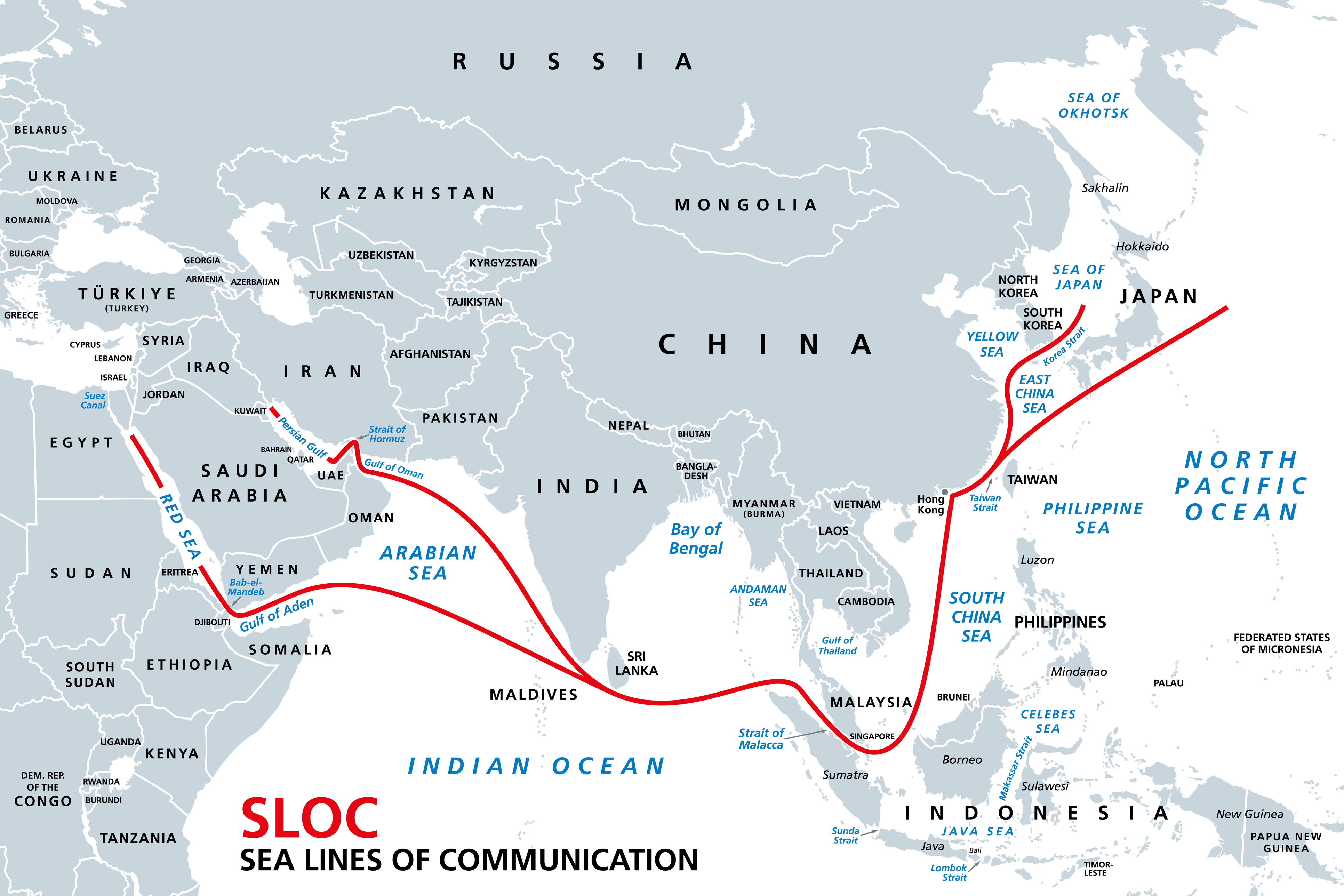
Trump has declared America “The Guardian of the Strait of Hormuz”, and in doing so is entitled to twenty per cent of the value of all cargo through it, and also reimposed the naval blockade.
Iran has answered with cruise missiles that killed a crew member and wounded eight more, drone strikes claimed against a US base in Kuwait, strikes on Bahrain, and missiles Jordan shot down before they landed. Traffic has collapsed to roughly a tenth of its pre-war volume, according to Kpler tanker-tracking data.
None of that is the point of this piece.
The point is what it confirms about a prediction made before any of it happened.
What has changed since three weeks ago
In The Week the Leverage Ran Out, written late June, I argued that Hormuz returning to genuinely free, fee-free passage was already the unlikely outcome, and that the sixty-day toll-free window in the memorandum would be the moment the question moved from paper to water.
That window has now expired, with one development worth noting. The expectation at the time was that Iran would win the fee fight through language, dressing a toll as a service charge under the memorandum’s own reference to coastal state rights. Alas instead, Washington has taken the mechanism for itself outright and named it plainly, a toll, twenty per cent, no service-charge euphemism required.
The outcome, a fee on transit, arrived roughly as expected. Who ended up claiming it certainly did not.
The deeper pattern from that piece is worth restating: power exercised through threats a country cannot always carry out invites everyone within range to test the gap. Iran tested it in June by reclosing the strait to pressure Israel over Lebanon.
Washington is now testing its own version of the identical logic, threatening a toll it has no UNCLOS or other standing to impose, no more than Iran had. The gap between what a great power can threaten and what it can actually enforce has not closed.
It has widened enough that Washington has started falling into it too.
What this actually means for the world economy and its security
Strip away the ship-by-ship reporting and three structural shifts are underway, not one bad news cycle.
First, chokepoint law is no longer a background assumption business can price around. For eighty years, free transit through international straits has been treated the way clean title to property is treated, so basic it rarely needed defending. That assumption is now actively being tested by the country that spent decades enforcing it, the same shift Edward Fishman traced last year in his own account of how America turned control over chokepoints, financial, technological, maritime, into a weapon, and how that weapon works differently once others learn to use it too. Insurance markets, shipping finance, and sovereign wealth allocation are all beginning to price chokepoint risk as a standing variable, not a tail event, and that repricing does not reverse even if this specific toll collapses within weeks.
Second, the precedent problem this series flagged in April, that a Gulf toll would not stay contained to the Gulf, is no longer theoretical. A senior US official told CNN last week that without safe passage assured in the strait, the two sides will never move on to nuclear negotiations at all, meaning the toll fight is now load-bearing for the entire negotiating track, not a side dispute running alongside it.
And a normalised toll here, even an American one, hands Beijing a template it has wanted for the South China Sea for years.
What happens at Hormuz this season will be read carefully in Malacca and off Taiwan’s eastern waters, whichever way it resolves.
Third, sovereign capital is now doing double duty as geopolitical hedge, not just financial allocation. JPMorgan quietly buying tankers through a Bermuda vehicle, Washington’s own accidental equity windfall in Intel, sovereign funds worldwide racing to back both chipmakers and the AI labs built on top of them: governments and institutions no longer trust any single supplier, ally, or rule to hold, so they are buying optionality wherever they can find it.
The same instinct is showing up government to government, not just through capital markets, as states quietly double down on resilience for energy, commodities, food, and specialist gases through new bilateral arrangements instead of waiting on any single chokepoint to stay open. Australia and Singapore’s own Protocol on Economic Resilience and Essential Supplies, concluded in April, is exactly this kind of hedge, guaranteeing LNG and diesel keep flowing between the two countries regardless of what happens to the sea lanes either side normally relies on.
Hormuz is simply where the same instinct is being tested with live fire instead of a balance sheet or a treaty.
The next three months
Four clocks converge on the same season, and none of them favour a clean resolution.
The nuclear negotiation window runs out by late summer, with safe passage now an explicit precondition for it continuing at all. Israel votes in October, sharpening incentives to keep pressure on instead of easing it. The American midterms follow in November, and Republican lawmakers are already uneasy about the economic cost of an open-ended blockade. And the strait’s own toll-free clock, the one this series flagged in June, has just expired into exactly the kind of contest it warned about.
My call: no side gets a clean win.
Physical limits reinforce the political ones here. By most defence analysts’ reckoning, munitions stockpiles on both sides are thinning after months of exchanges, and the Gulf’s summer heat, routinely above forty-five degrees, degrades naval operating tempo and troop endurance in a way no diplomat can talk around.
That points toward tit-for-tat exchanges, not sustained fire and fury, strikes and ceasefire pauses instead of an uninterrupted campaign.
Cycles are not calm, though.
They leave Gulf states unable to plan, insure, or rebuild anything, since business investment and infrastructure repair both need a horizon of stability a strike-pause-strike pattern never provides, even when no single exchange tips into full war.
I doubt Washington’s toll ever gets paid by anybody in practice, but the blockade and strikes continue in cycles, easing when oil and equity markets punish Washington domestically, resuming when Iran tests the gap again.
China’s valve holds, letting Beijing keep moving crude through informal arrangement even as the public dispute continues, while Tokyo, Seoul, and Delhi absorb the price volatility with no equivalent channel. But China is not a passive payer here. It is the single largest user of Hormuz and, as this series has documented, owns or controls close to a seventh of the world’s shipping tonnage outright by deadweight capacity.
China does not need to project any of that power toward the Gulf region to respond, though. Its leverage sits on home ground, at the Taiwan Strait, where it already has proximity, port control, and now an explicit American precedent to justify its own gating, inspection regime, or transit fee on waters it already contests.
If Washington actually attempts to collect twenty per cent from Chinese-linked cargo, expect the answer to arrive there instead, not a warship or sub sent toward Hormuz but a rule applied at home, almost immediately, in rough proportion to whatever Washington tries to collect.
Iran’s own foreign minister has already called twenty per cent too much, engaging with the number instead of rejecting a toll on principle, which tells you where this actually settles if it settles at all, a negotiated number far below twenty per cent, collected by nobody very consistently, with both governments claiming vindication.
And the precedent, regardless of how the number lands, does not un-happen.
The next chokepoint test, wherever it comes, starts from a world where the guardian of the rules broke it first.
Ray Ferguson writes the Infinite Horizons Substack. Signal Stack covers geopolitics and markets. Tech Stack covers AI and technology. Each edition is written plainly, for board-level readers, with evidence ahead of opinion and no patience for jargon. Full archive of previous Signal Stacks. Ray is a chairman and international banker with 35 years of leadership across Asia, the Middle East, Europe and the Americas. Former CEO of Standard Chartered Americas, CEO of Standard Chartered Singapore and SEA, UAE and Oman, and Deputy CEO of Bank ABC, Bahrain. Chair of insurer Singapore Life, leisure catamaran player 36ZERO Marine Group, and ESGpedia, Asia’s leading ESG data and technology company. Singapore citizen, ocean sailor, board mentor, and author of the soon to be published book: Infinite Horizons: Seasons in the Sun: A Memoir of Leadership and Life.
Join the conversation
Comments and replies take place on Substack, where Ray reads and responds.
1 comments so far.
INFINITE HORIZONS
Get each edition by email
Free. Delivered by Substack. Unsubscribe from any email.
Infinite Horizons is published by World Scientific and available now.
Buy the book

