Attention Is a Governance Input
What a long flight, a hurricane and a device that does one thing taught me about presence, and why attention belongs alongside diet, exercise and sleep.
· 8 min read
Infinite Horizons · Tech Stack · Ray Ferguson · Hawaii · 7 September 2026
This is the fiftieth edition since these Stacks began in April, and a departure from the usual material. No export controls, no model access, no sovereign compute.
Writing from a hotel room on Oahu, where Hurricane Lowell is inbound to these islands. Kauai has the hurricane warning and the serious end of this. Here it is a tropical storm warning, gusts to 70 miles an hour, and instructions to stay off the roads.
So I have a day indoors with some unplanned time to read and think, which is an odd route to the subject of this piece.
The flight over was where I did the first half of this draft. A long crossing of the Pacific on which the internet barely worked, and that turned out to be the point. The FT ran a piece this weekend by a writer who spent a month replacing his smartphone with single-purpose devices. An alarm clock. A camera. A turntable. A digital notepad. A field recorder.
He came out the other side with a modest conclusion: his phone went back to being a phone, and the rest of his life got quieter and more productive.
I read it on my phone before we took off, which is either irony or evidence, and then had several hours over the ocean with nothing to do except think about it. The gadgets are beside the point as well. The argument underneath them is one I arrived at some years ago by a different route and at considerably less expense, and it belongs on a governance agenda.
The part that matters if you lead anything
We audit the pack, the minutes, the conflicts register and the skills matrix. We do not audit whether anyone read anything properly.
The same holds one floor down. A chief executive reads a strategy paper between two meetings that both overran. A finance director reads a covenant schedule on a phone in a taxi. A general counsel reads a settlement draft in the ninety seconds before the call it concerns. A non-executive on four or five boards receives something like 200 pages a cycle from each. In every one of those cases the value the person adds sits almost entirely in the quality of the questions asked, and the quality of a question is downstream of how the material was read.
Material read in eleven-minute fragments produces eleven-minute questions. Questions about the number in the table, seldom about the assumption behind the number.
Fragmented attention hides itself.
That is the difficulty. The person who skimmed still turns up, still speaks, still sounds engaged, and nobody in the room can tell the difference between a question that came from sustained reading and one that came from the executive summary. Sometimes they cannot tell either.
The pattern I recognised
In 2019 I worked with an executive coach, Fabrice Desmarescaux, then managing partner of a recruitment firm in Singapore and now a partner at McKinsey, where he leads Aberkyn in South East Asia. He is a trained meditation and yoga teacher as well, which is unusual in that trade and turned out to matter. Over six months he kept returning to the same uncomfortable question. Where was I creating real value, and where was I merely staying busy?
The honest answer was that I had spread myself across too many small things. None of them were wrong. Collectively they were consuming the attention that two or three genuinely consequential decisions deserved. Fabrice’s prescription was unglamorous. Buy a good notebook. Buy a good pen. Write daily. No rules.
The notebook worked, for the reason the FT writer identifies precisely.
It did one thing.
Nothing on that page could interrupt me. No email arrived halfway down a paragraph to say a deal had moved. The page waited.
Two habits came out of that period and I still keep them. A daily block of undistracted time, phone in another room, journal open. Paper, in those days. Call it space to think.
And a Chairman’s Day: one day a week without meetings, preferably without email, given over to reading, reflection or walking.
I am about 80% compliant. It annoys me when I am not, and the annoyance is useful data.
This is a governance question
The wellness framing of all this bores me. The governance framing does not.
Charlie Wagstaff of Criticaleye once put a version of it to me that I ended up recording in my upcoming book. “Boards do not fail because they lack intelligence; they lack the courage to face what is really happening.” I would add a quieter failure mode alongside it. Boards, and executive teams with them, also fail because nobody in the room had four uninterrupted hours to notice what was really happening.
The two devices that earned their place
I am not a gadget accumulator, and the FT list runs to several thousand pounds, which is its own kind of answer to the problem. Two things pass the test.
The first is a reMarkable, which I did not buy. One of the leadership team at Singlife kindly gifted me one to try, on the reasonable assumption that I would either use it or quietly shelve it. I was sold inside a week.
Board packs, strategy papers, long contracts, anything that needs reading properly goes onto it, and I annotate with a stylus that drags across the screen with a friction that has clearly been engineered on purpose. There is no browser worth using, no inbox, no notification. It holds every pack I have read recently and finds any of them in seconds.
What it actually gives me is permission. When I open a long document on an iPad, some part of my brain knows that WhatsApp and Telegram and mail and the news sit three centimetres away behind a swipe. That knowledge alone degrades the reading. On a device that cannot go anywhere else, the reading is the only available option, and the mind settles into it within a page or two.
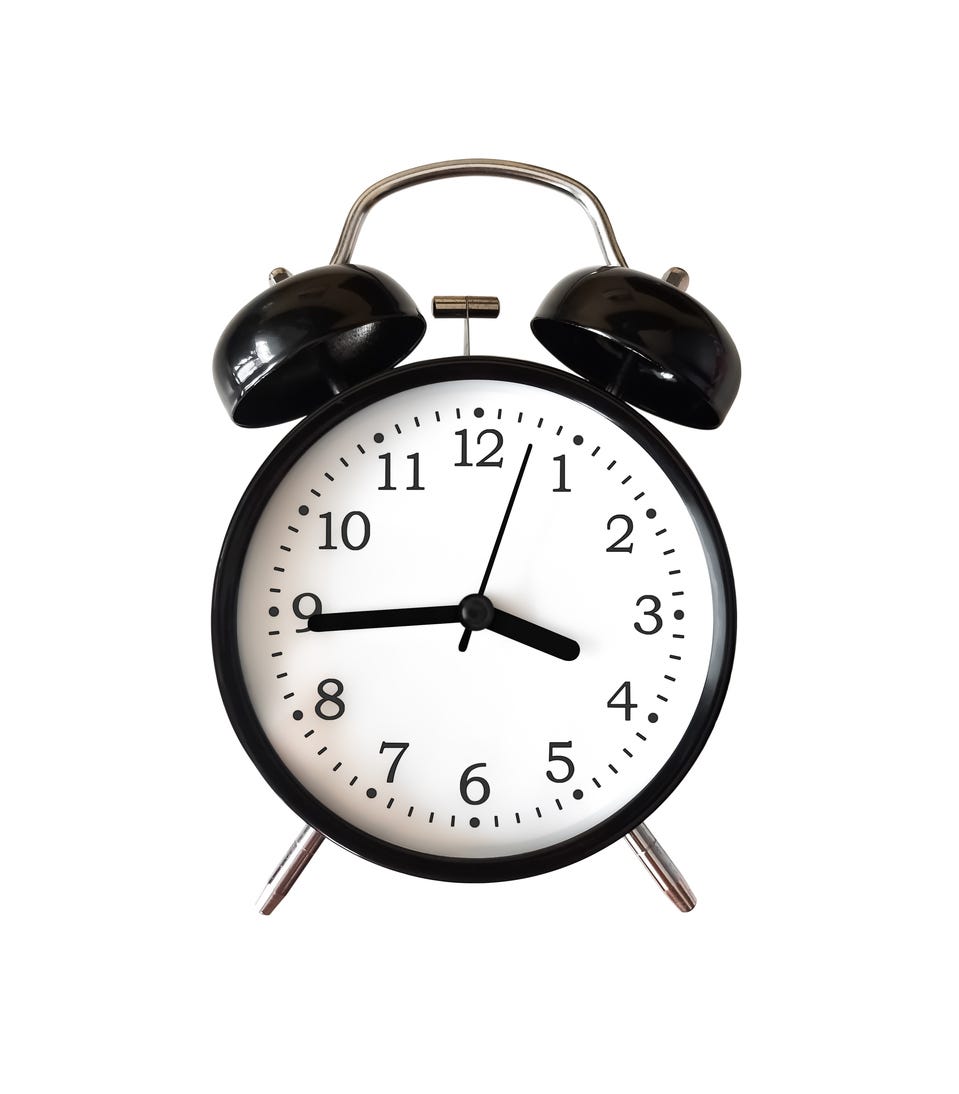
The second cost almost nothing. A travel alarm clock with a physical switch on the side. I take it everywhere. It means my phone does not need to be beside the bed in a hotel room in Bangkok or Tokyo or wherever the week has taken me, and the first thing I meet on waking is something other than a market move or a message from a different time zone.
The FT cites research finding that two weeks without mobile internet improved participants’ attention and wellbeing. I have no ability to live without mobile internet. I have complete ability to decide how I wake up. That switch is the whole mechanism, a physical object that makes a physical sound and does nothing else, and it is the cheapest governance improvement I have ever bought.
The honest counter-argument
There is a version of this that is consumption wearing a halo. Buying a £1,900 camera in order to be more present is a peculiar route to presence, and the market has noticed that anxiety about screens is monetisable. Every one of these objects is milled from aluminium and photographed against concrete, and the aesthetic is doing work the function does not entirely justify.
The discipline produces the result. The device is a commitment mechanism that makes the discipline easier to keep, in the same way that Fabrice made me prepay three months of gym trainer sessions before I had proved anything. The prepayment removed the exit. The training still had to be done.
So the test for any of these objects is simple. Does it remove an exit? The reMarkable removes the exit from a long document into an inbox. The alarm clock removes the exit from waking into a scroll. A £5,000 turntable removes very little that a decent pair of headphones does not, and I say that as somebody who owns records.
Today the weather removed all of them at once, which I do not recommend as a governance strategy.
Ian Bogost’s The Small Stuff, published this summer, argues that modern life has progressively distanced us from the sensory world through what he calls dematerialisation.
Ticket stubs, cash, the physical residue of experience, all of it moved behind glass. He is right, and there is a leadership version of the same observation. We have dematerialised judgement. The paper arrives as a PDF, the discussion happens over a video link, the decision is recorded in a note drafted by somebody who was not in the room in any meaningful sense, or by a bot. Somewhere in that chain the weight of the thing goes missing.
What I would actually recommend
Three things, all of which cost nothing.
Put the phone in another room for one hour a day and notice how uncomfortable the first week feels. The discomfort is the diagnosis.
Take one day a week off the business meetings entirely, whatever your seat. Protect it the way you would protect a board meeting, which means declining to move it when somebody senior asks nicely. My own compliance runs at 80% and I regard that as a poor score.
Read anything that matters on something that can do nothing else. Paper works. An e-ink tablet works better because it remembers infinitely.
Every morning I score myself out of five against a short list of things I have decided matter, written at the top of the journal, which lives on the reMarkable now, before anything else goes on the page. The scoring is a small act of truth-telling that catches self-deception before imbalance becomes damage. Attention belongs on that list and is not yet on mine, which is its own answer. Most senior people would score it generously and be wrong.
The phone is a remarkable instrument that has been handed a job it was never suited to, which is holding the whole of a life.
Giving a few of those jobs back to objects that do one thing is a modest correction.
In my experience it repays the effort within a fortnight.
Ray Ferguson writes the Infinite Horizons Substack on leadership and judgement in a messy world. Signal Stack reads geopolitics, markets and structural change. Tech Stack reads AI, technology and cyber. Each edition is written plainly, for board-level readers, with evidence ahead of opinion and no patience for jargon. Full archive of previous Signal Stacks. Ray is a chairman and international banker with 35 years of leadership across Asia, the Middle East, Europe and the Americas. Former CEO of Standard Chartered Americas, CEO of Standard Chartered Singapore and SEA, UAE and Oman, and Deputy CEO of Bank ABC, Bahrain. Chair of insurer Singapore Life, 36ZERO Marine Group, and ESGpedia, Asia's leading ESG data and technology company. Views expressed are personal. Singapore citizen, ocean sailor, Criticaleye board mentor, and author of Infinite Horizons: Seasons in The Sun, Life & Leadership Lessons, published by World Scientific and available now. It sets out what that career taught him about judgement, stewardship and endurance, and about the discipline required to sustain a life alongside the work. It takes the form of a memoir at its core. All author proceeds go to the Wheelchair Rugby Association of Singapore.
Join the conversation
Comments and replies take place on Substack, where Ray reads and responds.
INFINITE HORIZONS
Get each edition by email
Free. Delivered by Substack. Unsubscribe from any email.
Infinite Horizons is published by World Scientific and available now.
Buy the book