

The Next Target Is Energy
A weekend strike on Iran’s energy infrastructure is now strongly signalled by U.S. and Iranian infra retaliation into GCC likely. Same hard ceiling underneath it and a fourth chokepoint.
· 8 min read
Infinite Horizons · Signal Stack · Ray Ferguson · Frankfurt · 1 August 2026
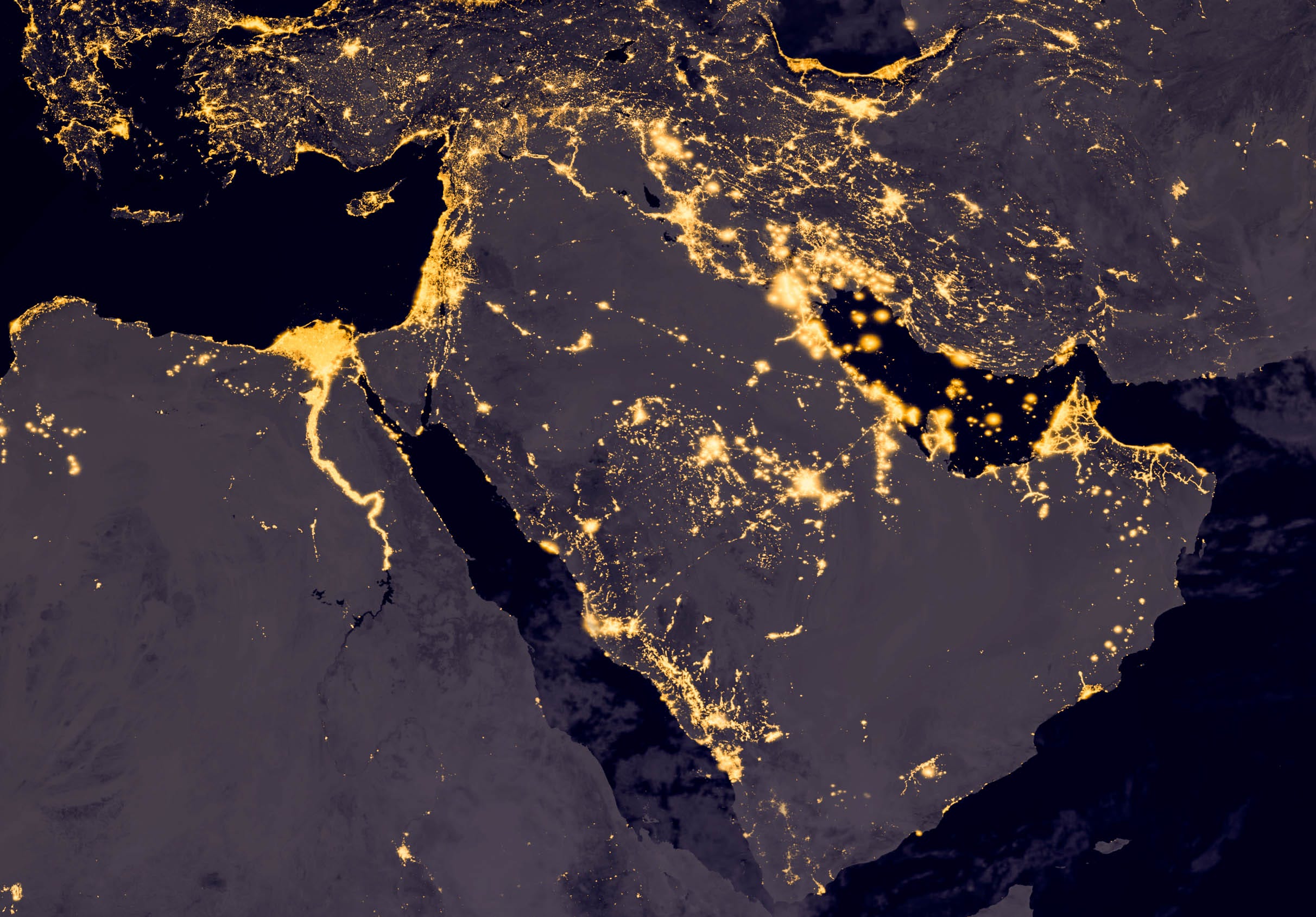
Still the same argument
A few days away from my laptop, back on the water in the beautiful Adriatic, is enough distance to test whether an argument still holds.
This one does.
The thesis this series has tracked since June, finite stockpiles setting this war’s real rhythm before diplomacy gets its turn, survived a week that added a new country to the map, a publicly quiet summit in Washington, and language from Trump back to where it sat in April.
Five months in, strikes still intensify, pause, and intensify again. Nothing has broken into the unconstrained campaign either side’s rhetoric keeps threatening, because arithmetic is doing the containing. Restraint comes downstream of the count.
A weekend strike, strongly signalled
CBS News, Axios, and the Wall Street Journal all reported within hours of each other that Washington and Israel are moving toward possible strikes on Iran’s energy infrastructure as soon as this weekend, a step up from the military targets struck throughout this phase.
The reporting converges on the target set and timing but diverges on authorisation: Axios says Trump is seriously considering the strikes and has not given final orders, while the Journal’s own account is more advanced, reporting that Trump has already instructed the military to prepare the assault.
At Friday’s Cabinet meeting, Trump signalled where his patience sits regardless: “we’ll be hitting them very hard,” he told reporters. Israel’s own position complicates that picture. Defence Minister Israel Katz has said publicly that Israel wants to strike Iran’s energy targets independently and that Washington has been the one holding it back, and an Israeli official told CBS the same day as its energy-strike report that Israel had not been asked to join.
A joint campaign, if Washington asks and Israel agrees, would still be Israel’s first direct role in strikes in several weeks. As of this weekend, no request had been confirmed on either side. The stated aim is pressure toward ceasefire terms, not declared open war. Whether that distinction survives contact with an actual energy campaign, historically the most escalatory target category short of regime change, is the test this series has applied to every claimed constraint all year.
The clearest confirmation this weekend came not from anonymous sourcing but from Washington’s own institutional behaviour. US embassies in Baghdad, Riyadh, Jerusalem, and Abu Dhabi all issued near-identical security alerts on Saturday, language markedly sharper than anything circulated since February’s initial worldwide caution: Americans in the region should consider departing, or be prepared to depart, should escalation follow. Four missions coordinating that language on the same weekend the press reported energy strikes under consideration is the kind of signal that is harder to leak and easier to trust than a background briefing. The stated aim is pressure toward ceasefire terms, not declared open war. Whether that distinction survives contact with an actual energy campaign, historically the most escalatory target category short of regime change, is the test this series has applied to every claimed constraint all year.
Egypt already answered part of that question
Wednesday supplied an early answer to how far this war now reaches.
A drone struck the US-owned Energos Winter gas storage vessel at Egypt’s Damietta port, the first reported attack on Egyptian soil since the war began in February. Fire spread to a second ship, the GasLog Salem; Egypt’s petroleum ministry reported no injuries. No party has claimed responsibility, and Egypt’s cabinet says the investigation continues. Iran’s Foreign Minister Araghchi posted directly that the region should stay “vigilant against Israeli plots and false-flag operations,” framing the strike as an attempt to drag Cairo into an anti-Iran coalition. Iranian state television had reportedly named Damietta as a retaliation target two days earlier, following a Ukrainian strike on an Iranian vessel in the Caspian.
Treat that as a useful signal of the information war around the strike, without treating it as attribution. The practical effect is settled either way: the Red Sea now has live pressure at both ends, Suez in the north and Bab el-Mandeb in the south, where a Houthi blockade on Saudi shipping already sits. A weekend energy campaign inside Iran and a live front in Egypt are not the same story, but they are evidence of the same propensity for widening.
A quiet meeting, possibly a consequential one
Netanyahu sat down with Trump this week. Publicly, the meeting produced little: no Iran nuclear announcement, no Gulf normalisation breakthrough, no formal settlement track. A senior Israeli official told Axios and Reuters afterward, on the record in a briefing, that the two men had explored economic pressure on Iran “through kinetic and non-kinetic means,” alongside diplomacy and the existing naval blockade, and that Trump specifically raised concerns about the war’s impact on energy markets and the wider economy.
None of that surfaced in the public readout. A photograph of two leaders shaking hands can travel further than the decision behind it, and this week the substance may have run the other way, a thin public account sitting over a room where military options, including ones aimed squarely at the energy question this weekend’s reporting is now testing.
Washington’s response to Damietta fits the same pattern: keep Suez outside the visible military track, keep Egypt out of the headline story, and let pressure settle back onto Iran itself. Cairo and Washington both want to avoid a second front opening on top of the one already running, and a quiet public posture is one way to manage that without ruling out a much louder private one.
Hormuz and the Gulf, still absorbing it
Traffic through Hormuz stayed near its lowest levels of the war on Friday, nine commodity vessels transiting against a pre-war norm of more than 100, while Bab el-Mandeb saw 31 the same day, recovering slightly from a weekly low of 16 after the Houthi embargo on Saudi shipping. CENTCOM has directly rebutted Iran’s claim to have closed the strait, saying as of 31 July it had rerouted 30 commercial vessels, disabled 2, and boarded 2 more to verify compliance with its own blockade of Iranian ports.
Today’s live reporting adds fresh weight to the same story: Kuwait’s air defences responding to hostile drones, UK reporting a tanker master saw an explosion near Oman’s Khasab, and Iran’s IRGC claiming two tankers struck and four turned back. The tanker claims remain unconfirmed beyond Iran’s own account.
Marine war-risk premiums spiked more than 1,000 per cent earlier in the war, and Cape of Good Hope Red Sea rerouting still adds ten to fourteen days to affected voyages. Kuwait, Bahrain, and Jordan have each reported intercepted attacks this phase. Saudi Arabia’s own direct entry, under an Article 51 claim from its Ministry of Defence, remains the sharpest marker of how far the war’s costs have already spread. Egypt, despite Wednesday’s strike, has declined to cross that same threshold, a gap worth noting on its own.
The board signal
The real signal for boards is how many workarounds now need treated as routine, and this is where the year needs to be read plainly, without the hopeful gloss most reporting still carries.
Hormuz is not operating normally and there is no sign tahts changing anytime soon. Bab el-Mandeb is no longer dependable. Suez sits close enough to the firing line that Egypt manages attribution as carefully as damage.
Each of those, taken alone, could still be filed under temporary disruption, the kind of thing markets and boards absorb for a quarter or two before conditions revert. Taken together, across five months and now a fourth chokepoint added to the map, they stop describing a disruption and start describing a new baseline.
That distinction matters more than anything else in this piece. A disruption is something you wait out. A baseline is something you build around, permanently, in how a ship is insured, how a route is planned, and how a board sets its risk appetite across a five-year horizon.
For Asia specifically, the uncomfortable version of that point is this: shipping resilience now depends on whether secondary routes stay secondary once the first route breaks, and this year has answered that question badly.
A secondary route was supposed to be a release valve, somewhere traffic goes when the primary chokepoint tightens. Bab el-Mandeb was that release valve for Saudi oil for Hormuz, and it is now under its own blockade. There is no evidence anywhere in this year’s pattern that the system reverts once the immediate trigger passes. Every workaround that gets normalised makes the next one easier to justify and harder to reverse, and nothing in five months of watching this closely suggests a return to how 2025 worked. Full stop. Plan on this as the operating environment, not the interruption to it.
Trump’s language this week was the bluntest since spring. This week it has company: a possible campaign against Iran’s energy infrastructure, reported by CBS and Axios as pending final authorisation and by the Journal as ordered for preparation, is a more concrete return to April’s posture than words alone would suggest. The likely Iranian retaliation on GCC critical infrastructure, will again set back any sense of normalisation in these economies.
What changed this week is the map and possibly the target set.
The same hard ceiling still sets the outer limit on how far any single weekend can go. This week needed one addition to the argument. That is a reasonable measure of how much has actually changed, and no measure at all of how much has reverted. Full archive of this series, including the pieces this one builds on, sits here.
Ray Ferguson writes the Infinite Horizons Substack. Signal Stack covers geopolitics and markets. Tech Stack covers AI and technology. Each edition is written plainly, for board-level readers, with evidence ahead of opinion and no patience for jargon. Full archive of previous Signal Stacks. Ray is a chairman and international banker with 35 years of leadership across Asia, the Middle East, Europe and the Americas. Former CEO of Standard Chartered Americas, CEO of Standard Chartered Singapore and SEA, UAE and Oman, and Deputy CEO of Bank ABC, Bahrain. Chair of insurer Singapore Life, 36ZERO Marine Group, and ESGpedia, Asia’s leading ESG data and technology company. Singapore citizen, ocean sailor, board mentor, and author of the memoir Infinite Horizons: Seasons in the Sun, Life & Leadership Lessons: A Memoir.
Join the conversation
Comments and replies take place on Substack, where Ray reads and responds.
INFINITE HORIZONS
Get each edition by email
Free. Delivered by Substack. Unsubscribe from any email.
Infinite Horizons is published by World Scientific and available now.
Buy the book

