Close, But No Cigar
Janet Yellen in Hong Kong on the Fed, the war, and an inflation shock that arrived at exactly the wrong moment.
· 5 min read
Infinite Horizons:Signal Stack Series Ray Ferguson
Here is the number that should keep every portfolio manager, energy trader, and finance minister awake tonight: 200 days.
Thanks for reading! Subscribe for free to receive new posts and support my work.
That is the IMF’s estimate for the minimum time required, after a full and durable settlement, for global commodity flows to return to something resembling normal. Two hundred days of demining the strait. Reinstating war risk insurance. Rebuilding freight routes. Refilling LNG carriers and crude inventories drawn down to emergency levels across three continents. And even that number carries a caveat: for helium, the constraint is plant rebuilding, measured in years.
Two hundred days from today is early November. Two hundred days from a durable settlement, which no one has yet agreed, pushes recovery into 2027. The clock has not started.
On Sunday, the heads of the IEA, the IMF, and the World Bank warned that even after shipping resumes, supplies of key commodities will take considerable time to return to pre-conflict levels. Kristalina Georgieva called it a supply shock that is “large, global, and asymmetric.” Then she said, with some conviction, that the Strait of Hormuz may never return to its pre-war traffic levels, drawing a direct parallel with Bab el-Mandeb.
Yellen in Hong Kong
I listened to Janet Yellen at the HSBC Global Investment Summit in Hong Kong today. She delivered the most precise diagnosis of the crisis that any former Fed chair has offered since the war began.
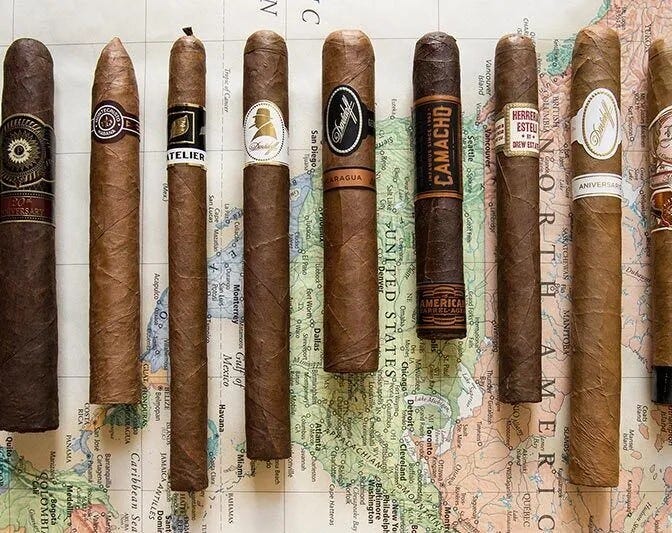
The supply shock is exceptionally broad: oil, LNG, fertilisers, food, shipping costs, semiconductors via the helium shortage. Pass-through into core inflation is likely. The critical question is whether the shock becomes embedded. Yellen’s answer turned on a point most commentary has missed: the starting conditions. During her tenure at the Fed, inflation was anchored at or below 2 per cent. An energy shock in that environment passes through and fades. As Yellen put it: 3, not 2. Close, but no cigar. The Fed entered this crisis with inflation at 3 per cent against a 2 per cent target, expectations less firmly anchored, and a recent history of tariff pass-through that was supposed to be temporary. Five years of elevated inflation creates a different psychology than five years of price stability.
On the incoming Fed chair, Kevin Warsh, Yellen drew on six years of shared FOMC service. His inflation credentials are well deserved: he resigned as governor over QE2, identified the biggest risk in 2009 as being too late to withdraw stimulus, and has suggested 2 per cent may be too high a target. So how does anyone get comfortable that rates come down? Warsh believes AI is driving a structural productivity acceleration analogous to the late 1990s, when Greenspan argued technology would prove disinflationary and was eventually vindicated.
Yellen dismantled the thesis. Current productivity growth at 1 to 2.5 per cent is nothing like the 1990s. The demand-side effects of the AI boom, surging investment and equity-driven consumption, work in the opposite direction. Greenspan built his credibility over decades. The incoming chair does not walk in with that standing. Yellen did not see the FOMC accepting the argument in the short run.
She then broadened the frame. How often does the leader of the reserve currency country argue that interest rates should be set to reduce the debt service cost of the federal debt? When you hear words like that, Yellen said, that is what you hear in countries that end up with high and hyperinflation, akin to a banana republic. The United States is running a 6 per cent of GDP deficit in what was, two months ago, a strong economy. The debt just keeps growing. The Congressional Budget Office projects debt-to-GDP reaching 160 per cent by 2050 on unchanged policies. A war in the Gulf is now layered on top.
If investors lose confidence, risk premia on long-term bonds will rise and exacerbate the deficit. Market discipline, she told the room directly, is the one mechanism that can force bipartisan compromise. On the dollar, she was measured: gold at nearly $4,800 is a signal worth watching, but the dollar’s structural advantages, 90 per cent of cross-border transactions, unmatched depth, network externalities that function like a language, are not going to unravel anytime soon.
The Deal That Does Not Yet Exist
Trump told Fox News today that the war is “close to over” and hinted at a second round of talks within days. The tone has shifted from “locked and loaded” on Sunday to diplomatic optimism on Tuesday. The positions have not.
The US proposed a 20-year enrichment suspension at Islamabad. Iran countered with 3 to 5 years. The landing zone, likely 7 to 10 years with enhanced IAEA access and phased Hormuz reopening, is visible. Araghchi said they were “inches away.” Vance’s formulation, a “conclusive commitment” plus enriched material out, is carefully built to accommodate a long suspension rather than the permanent abandonment Trump’s rhetoric demands. Israel is the harder variable: any sunset clause is, from Jerusalem’s perspective, a countdown.
US ground forces remain locked and loaded. The 82nd Airborne, Marine Expeditionary Units, and armoured brigades in Kuwait and the UAE have not stood down. Satellite imagery released today shows Iran using the ceasefire to dig out its underground missile bases, clearing rubble from tunnel entrances the US deliberately struck. Half of Iran’s missile launchers survived. The ceasefire is not just a pause. It is a reconstitution window.
The Structural Damage Beyond 200 Days
Helium sits outside the recovery timeline entirely. Qatar’s Ras Laffan sustained extensive damage in early March; full restoration is estimated at 3 to 5 years. Russia’s Amur plant remains well below capacity. Australia’s Amadeus Basin in the Northern Territory holds the only proven high-content resource outside Qatar and Russia that can move to production on a compressed timeline. The war has turned a decade-long diversification cycle into an urgent commercial window.
If Warsh’s case for patience rests on AI-driven productivity growth, and the AI buildout is delayed by 18 months because the helium it requires is trapped behind a mined strait, then the very force the incoming chair is counting on has itself been damaged by the energy shock.
Macron announced today a conference of more than 40 nations to plan a multinational mission restoring freedom of navigation in the strait. Starmer confirmed the UK will contribute minesweeping, though it will not join Trump’s blockade. A longer-term proposal also exists for a Strait of Hormuz Cooperation Organisation, a joint venture structure with the Gulf coastal states and major consuming nations as shareholders. Whether it gains traction depends on the political conditions that emerge from whatever settlement eventually takes shape.
Two hundred days to undo the damage. Forty-six days since it began accumulating. The ceasefire holds, the strait does not, and the clock has not started.
Ray Ferguson is a chairman and international banker with 35+ years of leadership across Asia, the Middle East, Europe and the Americas. Former CEO of Standard Chartered Singapore and SEA, UAE and Oman, and Deputy CEO of Bank ABC, Bahrain. Chair of Singlife. Singapore citizen, ocean sailor, board mentor, and author of the memoir Infinite Horizons: Seasons in the Sun - A Memoir of Leadership and Life. He writes on geopolitics, markets and leadership at Infinite Horizons on Substack.
Thanks for reading! Subscribe for free to receive new posts and support my work.
Join the conversation
Comments and replies take place on Substack, where Ray reads and responds.
INFINITE HORIZONS
Get each edition by email
Free. Delivered by Substack. Unsubscribe from any email.
Infinite Horizons is published by World Scientific and available now.
Buy the book