

Momentum
Four days to ceasefire ends. The blockade is working. Xi is now talking. The damage runs longer than the deal whatever.
· 6 min read · 2 comments
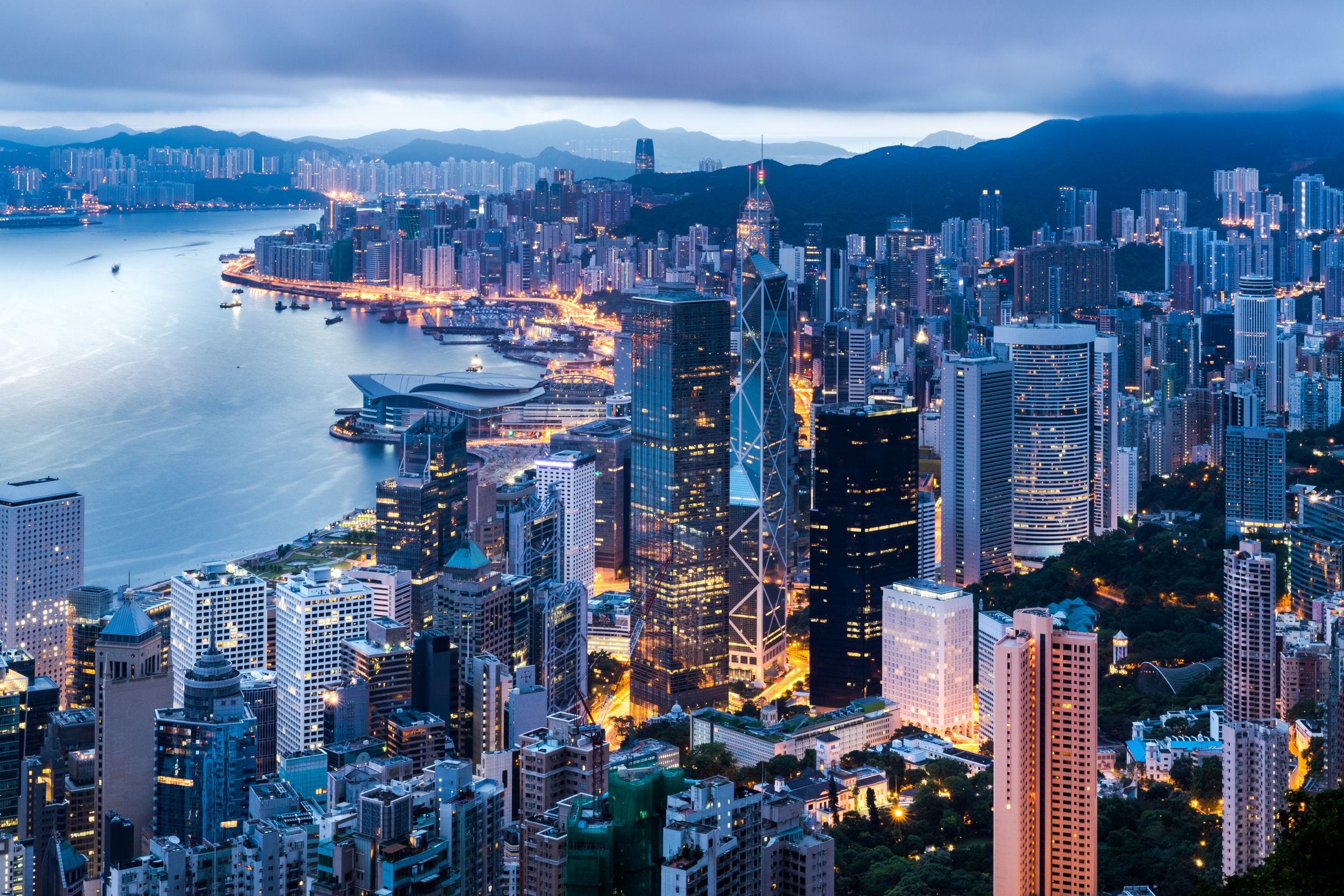
Infinite Horizons:Signal Stack Series | Hong Kong 17 April 2026
Thanks for reading! Subscribe for free to receive new posts and support my work.
The deal may happen this weekend. Trump told Fox Business earlier the war is “very close to over.” The White House says it feels “good about prospects.” Pakistani interlocutors arrived in Tehran on Wednesday and met directly with Araghchi, who confirmed Iran remains committed to promoting peace. Pakistan is now framing the process as an ongoing “Islamabad process,” a track, not a single event. Trump may travel to Islamabad 2 himself over the weekend. Markets are pricing resolution. The ceasefire expires in four days.
The Lebanon ceasefire is the signal most analysts underweighted. Iran has used Israeli strikes on Lebanon as a pretext to suspend Hormuz cooperation three times since 7 April. Trump announced a 10-day Israel-Lebanon halt while we slept in Asia, and invited both Netanyahu and Lebanese President to the White House for the first direct talks between the two countries since 1983. That removes Iran’s most readily available escape hatch for the duration of the Islamabad 2 window. Significantly, it is the diplomatic equivalent of clearing the board. Whether it holds is a separate question. That it was announced now, at this moment of maximum deal momentum, is not coincidental, and very positive.
How the pressure worked
The blockade worked faster than expected. CENTCOM confirmed it has completely halted Iranian maritime trade. Iran lost track of mines it planted in the strait, the operation was haphazard, undocumented, some mines have drifted with sea currents. Araghchi acknowledged the problem indirectly, saying reopening would take place “taking into account technical constraints.” US officials confirmed that language referred to the mine problem. Iran cannot make a credible reopening commitment because it cannot certify the waterway is safe even if it wanted to. The US mine clearance operation is therefore doing joint work that serves both sides simultaneously.
At the Pentagon on Thursday, Hegseth opened by threatening and then offering. “We are locked and loaded on your critical dual-use infrastructure, on your remaining power generation, and on your energy industry.” Then: “You, Iran, can choose a prosperous future, a golden bridge, and we hope that you do.” The carrot and the stick, same breath, deliberate.
Writing from Hong Kong
Writing from Hong Kong, where the HSBC Global Investment Summit concluded yesterday, gives this moment a different frame than Washington provides. Five thousand delegates spent three days at the intersection of every tension this series tracks. Former US Treasury Secretary Janet Yellen called the Iran conflict “a broad supply shock” covering gasoline, LNG, fertilisers, food, shipping and semiconductors. More inflation to come. She had never seen a political threat to Federal Reserve independence of this magnitude. She described Trump’s interest rate dictates to Powell as akin to a banana republic. The woman who ran the Treasury and the Federal Reserve offered no reassurance that the worst is behind us.
On the ground across the region the transmission is already visible. In Bangkok we know of maximum half-tank fuel rules, and taxi drivers could only fill their tanks in the morning. By night they would not drive to the beaches, they could not be certain of finding fuel to get back. Hotels there are running 30% below expected occupancy because European tourists who connect through Middle Eastern hubs are not arriving. This is not a macro statistic. This is the Hormuz crisis at street level, six weeks in.
The China question
From Hong Kong the China picture is clearer than it appears from Washington, and considerably more nuanced than the close-allies framing that dominates Western analysis.
China and Iran are not strategic allies. They are mutual survival partners born of Western sanctions. Chinese capital does not flow to Iran, three years of serious deal-making across the Gulf and Iran is simply not considered an investment destination, whether by sanctions or politics.
Chinese capital flows to the GCC. China’s real Gulf relationships, measured by trade volume and investment, are with the countries that are Iran’s adversaries. Beijing has always maintained a careful balance between GCC and Iran simultaneously, and that balance, not the US-China framing, is the operative constraint on Chinese behaviour.
It is probably not providing weapons. Xi’s letter to Trump confirming no weapons shipments, confirmed publicly by Hegseth at the Pentagon, closes the weapons question operationally for the next two weeks. The US will proceed on that basis regardless of what intelligence agencies believe about the underlying reality.
What is less visible but analytically more important is China’s Pakistan channel. Pakistan is simultaneously China’s close regional partner and the ceasefire mediator. Beijing has a direct line into the mediation process itself that Washington does not fully control. The interlocutors’ arrival in Tehran on Wednesday is not only a Pakistani initiative. It reflects Chinese interest in a resolution before the Beijing summit.
Xi broke his seven-week silence on Tuesday to warn that the world order is “crumbling into disarray” and to pledge a “constructive role.” That language is not decorative. The diplomatic queue in Beijing over recent weeks: Starmer, Carney, Merz, Sanchez etc tells the real story. These are not non-aligned nations hedging. These are core US allies seeking Chinese engagement because Washington is managing in a way that makes them uncomfortable.
China is not positioning itself against the US. It is positioning itself as the responsible actor, the adult in the room, when the US is not playing that role. That is a significant reputational shift with consequences that outlast this conflict.
That said, China cannot deliver Iran. It is not a puppet master. It can exert pressure, and it has genuine leverage through the GCC relationships, the Pakistan channel, and Iran’s economic dependency. But China cannot bridge the gap between what Iran needs to feel secure and what Israel is willing to allow. If Netanyahu is perceived in Tehran as using the ceasefire window to prepare for a resumption of strikes, Iranian flexibility collapses regardless of Chinese pressure. That is the binding constraint on what Beijing can actually achieve. The wildcard is not China. The wildcard is Israel.
The damage that does not end with the deal
While we celebrate the S&P 500 at an all-time high, in Asia the picture is structurally different and, whatever happens, months from resolution. The global helium supply chain operates on a 45-day liquid inventory buffer before stockpiles boil off. That buffer passed this week. Chip fabs across South Korea and Taiwan have been rationing since early March. Every wafer start that did not happen in March and April becomes a memory chip that does not exist in Q3, it appears in device pricing 8 to 12 weeks later regardless of what Islamabad 2 produces. China is the world’s manufacturer and is importing petroleum derivatives at significantly increased prices, and that will drive price rises in the goods being exported to the rest of the world.
The all-time high is a Western equity story. The six months of downstream inlatioary and supply chain pain is an Asian physical story. A deal this weekend does not change the arithmetic for the Asian supply chain for rest of 2026. That damage is already written.
Three questions before Tuesday
Is Islamabad 2 officially confirmed before Saturday and does Trump plan to travel to Pakistan?
Does the Lebanon ceasefire hold through the talks?
Does the mine clearance operation certify any lane as safe for commercial passage?
The window is open. Four days.
Ray Ferguson is a chairman and international banker with 35+ years of leadership across Asia, the Middle East, Europe and the Americas. Former CEO of Standard Chartered Singapore and SEA, UAE and Oman, and Deputy CEO of Bank ABC, Bahrain. Chair of Singlife. Singapore citizen, ocean sailor, board mentor, and author of the memoir Infinite Horizons: Seasons in the Sun, A Memoir of Leadership and Life. He writes on geopolitics, markets and leadership at Infinite Horizons on Substack.
Thanks for reading! Subscribe for free to receive new posts and support my work.
Join the conversation
Comments and replies take place on Substack, where Ray reads and responds.
2 comments so far.
INFINITE HORIZONS
Get each edition by email
Free. Delivered by Substack. Unsubscribe from any email.
Infinite Horizons is published by World Scientific and available now.
Buy the book

