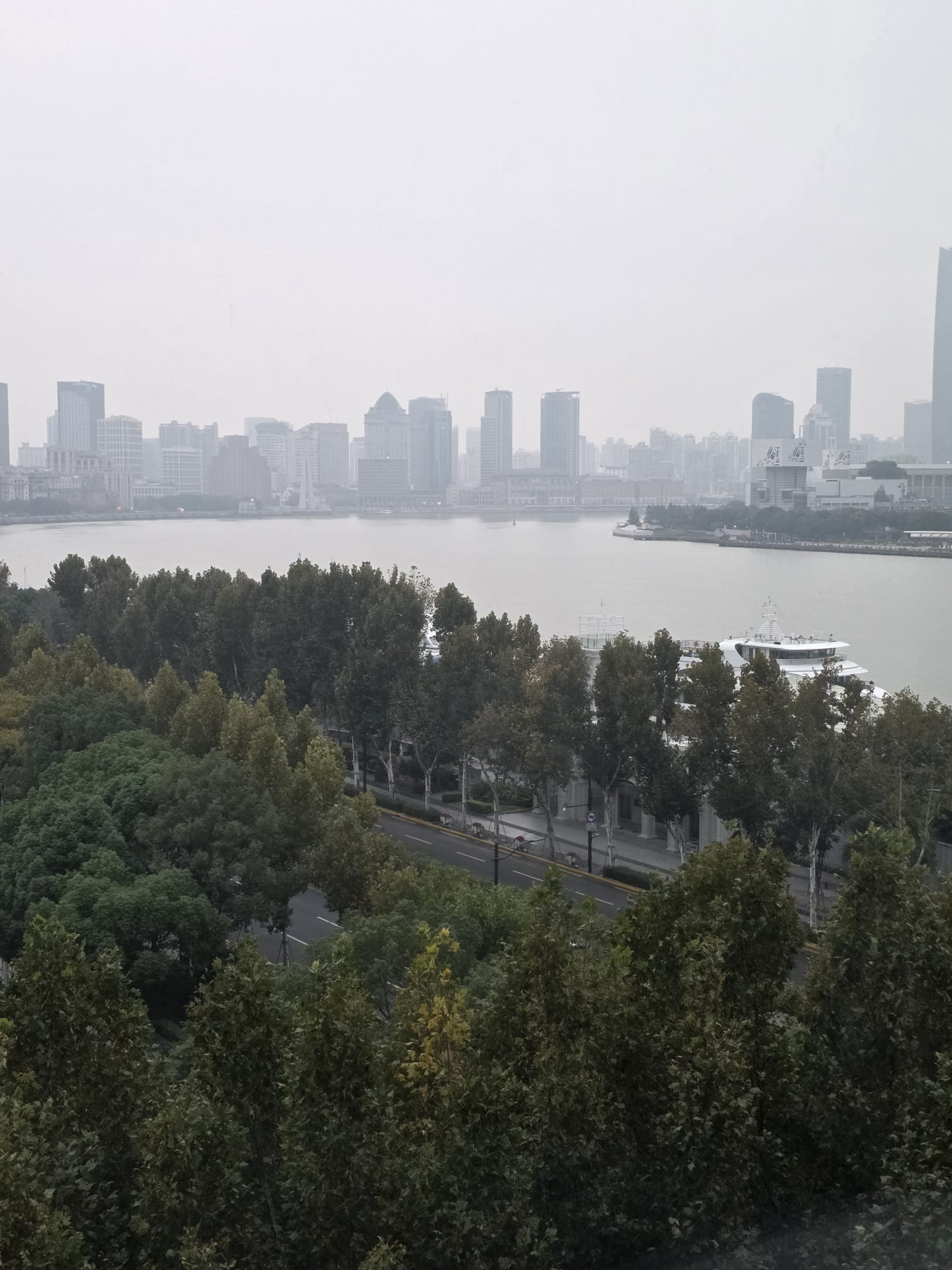
Reading "Chokepoints" while looking out at Malacca
Indonesian minister floats monetising the Malacca Strait. Singapore unambiguously wants to preserve it as is.
· 6 min read
Infinite Horizons: Signal Stack Series · Ray Ferguson · Singapore 23 April 2026
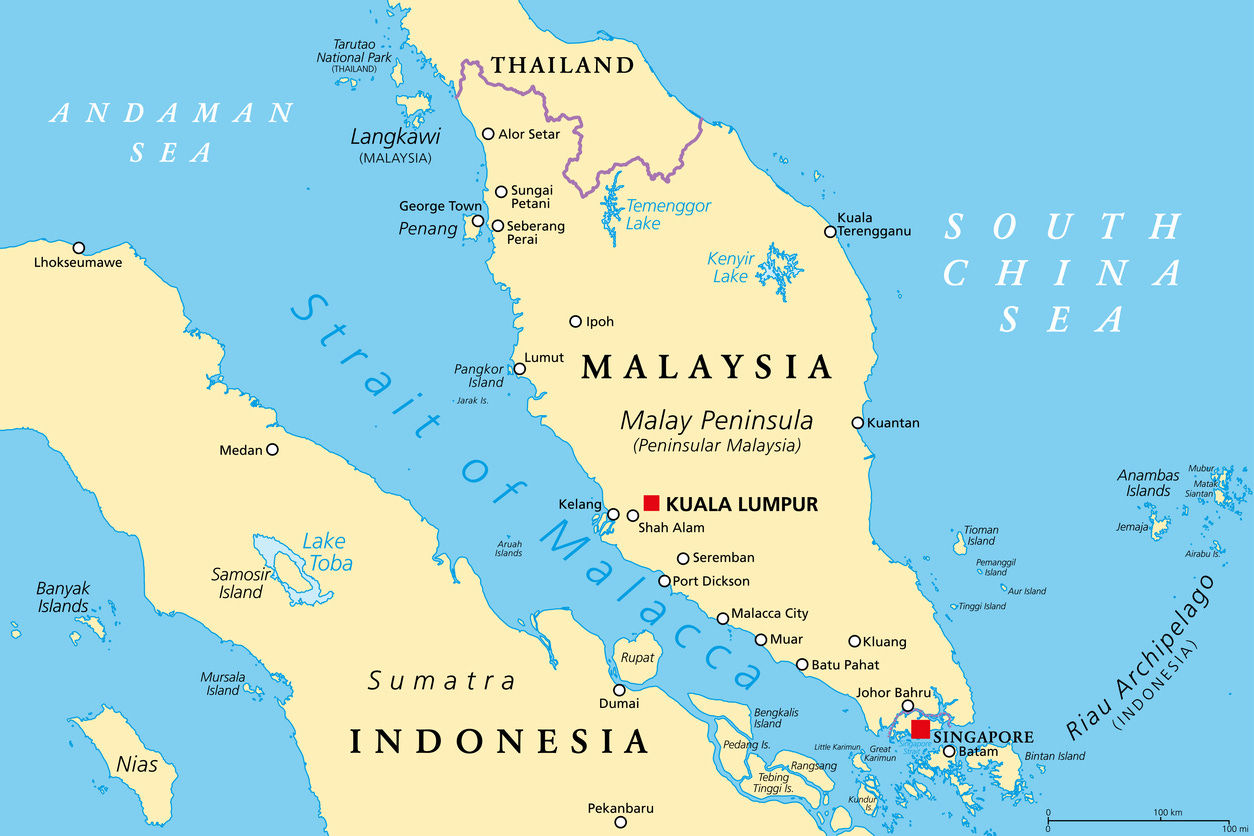
Against the background of two separate statements from two senior ministers of neighbouring governments yesterday, one from Jakarta and one from Singapore, I found myself thinking deeper about what is actually happening to the region. Both statements concerned the same object. The Malacca Strait. Both referenced the same precedent. The Iranian toll booth scheme at Hormuz. The two conclusions could not have been more different. Indonesia’s finance minister floated Malacca as potentially the next commercial rent opportunity. Singapore’s foreign minister declared once more that Malacca transit passage non-negotiable and warned that Hormuz is a dry run for the Pacific. On the same day. In the same region. Pointing in opposite directions.
The framework that made sense of this for me, as I walked on the Sentosa seashore looking at the Straits this morning, is one I have been reading for the past week. Eddie Fishman’s “Chokepoints”, which I spotted in a Hong Kong bookstore last week.
Fishman’s thesis is that the United States has spent twenty-five years building a new arsenal of economic coercion. Dollar clearing. Correspondent banking. SWIFT. Secondary sanctions. Export controls on advanced semiconductors. The weaponisation of the global financial system, the technology stack, and increasingly the energy system. The instruments were used against Iran, Russia, Venezuela, North Korea. They are now being turned on China.
Fishman had a Foreign Affairs essay published on 21 April I just found, “How to Fight an Economic War: A Field Manual for a Ruptured World,” extends the excellent book into the Iran conflict directly.
He argues that Tehran’s closure of the Strait of Hormuz demonstrated how smaller powers can adapt the logic of economic warfare to kinetic conflict, using drones and missiles to shape the behaviour of private firms much as the United States does with financial sanctions. That is the move the book could not have anticipated because it went to press before February. The field manual now exists.
I lived inside part of that arc. From 2005 to 2008 I ran Standard Chartered’s Americas business out of New York, during the window Stuart Levey’s Treasury operation was systematically extending the designations regime. What became clear in New York then was that US dollar clearing access had ceased to be a commercial service. It had become a strategic instrument. The infrastructure of globalisation was quietly becoming the infrastructure of economic coercion. Reading Fishman’s book and his sequel essay is, for me, a walk back through a period I watched being built, brick by brick.
The Foreign Affairs essay reinforced something I argued on 11 April in “A Hormuz Chokepoint Precedent?”. That piece named the Hormuz toll bill as a precedent-setting event and said the propagation would not stay in the Gulf. It identified Malacca and the Taiwan Strait as the obvious candidates for propagation.
On 13 April, Secretary of War Hegseth and Indonesian Defence Minister Sjamsoeddin signed the Major Defense Cooperation Partnership at the Pentagon. The codevelopment language commits both sides to sophisticated asymmetric capabilities and next-generation defence technologies in the maritime, subsurface and autonomous systems domains. These are the instruments that may be used to close a chokepoint in a crisis. A classified proposal, Operationalizing US Overflight, would grant blanket notification-based access to Indonesian airspace for US military aircraft. Together the package is the architecture for persistent US surveillance of and potential strike capability over the Malacca Strait. Standalone this isn’t that significant perhaps and hasn’t been reported on widely and who knows yet its full significance.
Which brings me back to yesterday’s two statements.
Indonesia’s Finance Minister Purbaya floated a Malacca transit toll at a Jakarta symposium, citing Iran's recent Hormuz transit toll legislation by name, before walking the idea back within the same speech. Is Jakarta testing a two-track strategic entrepreneurship? Security access rent from Washington on one axis. Commercial transit rent on the other? Either or both would surely strain the three-decade implicit symmetry that held Singapore, Malaysia and Indonesia to the principle that Malacca remains a fundamental shared regional good.
Also yesterday, at Jewel Changi Airport, Singapore’s Minister for Foreign Affairs Vivian Balakrishnan delivered remarks he had already stated in Parliament on 7 April, restating them against the Malacca backdrop, rather than as a new position. He opened by observing that we are witnessing the weaponisation of interdependence, which maps directly onto Fishman’s thesis. If the United States and China go to war in the Pacific, he continued, what you are witnessing now in the Strait of Hormuz is just a dry run. The right of transit passage is guaranteed for everyone. Singapore will not participate in any attempt to close, interdict or impose tolls in its neighbourhood. We will be useful, but we will not be made use of. The narrowest point at Hormuz is 21 nautical miles. The narrowest point in the Straits of Malacca and Singapore is two.
I support what Vivian Balakrishnan said yesterday without caveat. The Singapore doctrine he articulated is correct. It is the only position that makes sense for a small, trade-dependent state operating between two superpowers. Balakrishnan anchored it to the 1973 oil embargo, when Lee Kuan Yew called in the oil majors, told them Singapore would not touch a drop of their storage, would pay full market price for anything it needed, and would take its share of rationing. Simply not panicking in a crisis is worth a lot, and the consequence was that Singapore’s refining and petrochemical sector took off from that point. That is the historical register. Maintain reliability. Price everything fully. Refuse to negotiate on principles. Negotiate actively on substance. This is how Singapore has weathered eighty years of external volatility. It will work again. That statement is what credible leadership under pressure sounds like.
One point worth making plainly, because it is maybe underappreciated. China genuinely wants these multilateral institutions to thrive. Xi Jinping’s Global Governance Initiative of September 2025 puts multilateralism and international rule of law among its five core principles. Beijing needs UNCLOS to hold and the IMO to function, because eighty per cent of Chinese crude oil imports transit Malacca, and China owns the majority of the worlds ships. Any other outcome prices China out of its own energy security. Singapore’s position is substantially aligned with what Beijing wants to hear, and this is the non-obvious convergence that matters.
This is slower burn topic. Four things to watch over the next ninety days. First, whether Washington formalises the overflight Letter of Intent or the proposal is quietly shelved. Second, whether the Malacca toll proposal acquires more test floating, even presidential or cabinet discussion or is quietly dropped. Third, whether some form of fee-paying framework for Hormuz governance moves into the Islamabad negotiation text, in whatever structural form emerges. Fourth, whether the IMO 36th Extraordinary Session produces a workable safe corridor mechanism.
In summary, the Singapore government’s position laid out again yesterday on transit passage, tolls, and the refusal to choose is correct. It is the only viable pathway and is the position that protects Singapore’s existential interest and the wider rules-based order that every trade-dependent state in Asia and beyond depends on. And I hope Purbaya was joking.
Ray Ferguson is a chairman and international banker with 35+ years of leadership across Asia, the Middle East, Europe and the Americas. Former CEO of Standard Chartered Americas, CEO of Standard Chartered Singapore and SEA, UAE and Oman, and Deputy CEO of Bank ABC, Bahrain. Chair of insurer Singapore Life and 36ZERO Marine Group. Singapore citizen, ocean sailor, board mentor, and author of the memoir Infinite Horizons: Seasons in the Sun: A Memoir of Leadership and Life. He writes on geopolitics, markets and leadership.
Join the conversation
Comments and replies take place on Substack, where Ray reads and responds.
INFINITE HORIZONS
Get each edition by email
Free. Delivered by Substack. Unsubscribe from any email.
Infinite Horizons is published by World Scientific and available now.
Buy the book