Cold peace at Beijing. No Hormuz militarisation. No tolls. No nuclear weapons. Trump rejects Irans latest deal and signals military cleanup plan on drawing board.
Beijing thankfully rejected the toll architecture. Trump's "cleanup" language is significant kinetic signal. The Riyadh Compact is long-tail, not base case.
· 7 min read
Infinite Horizons: Signal Stack Series · Ray Ferguson · Southport, U.K. 16 May 2026
Trump is back in Washington. The Beijing summit closed Friday. Hormuz remains closed. The blockade holds subject to some selective porousness. The IRGC’s “Martyr Commander” exercise continues outside Tehran. Iran has not accepted the post-summit framework and Trump has dismissed Iran’s latest.
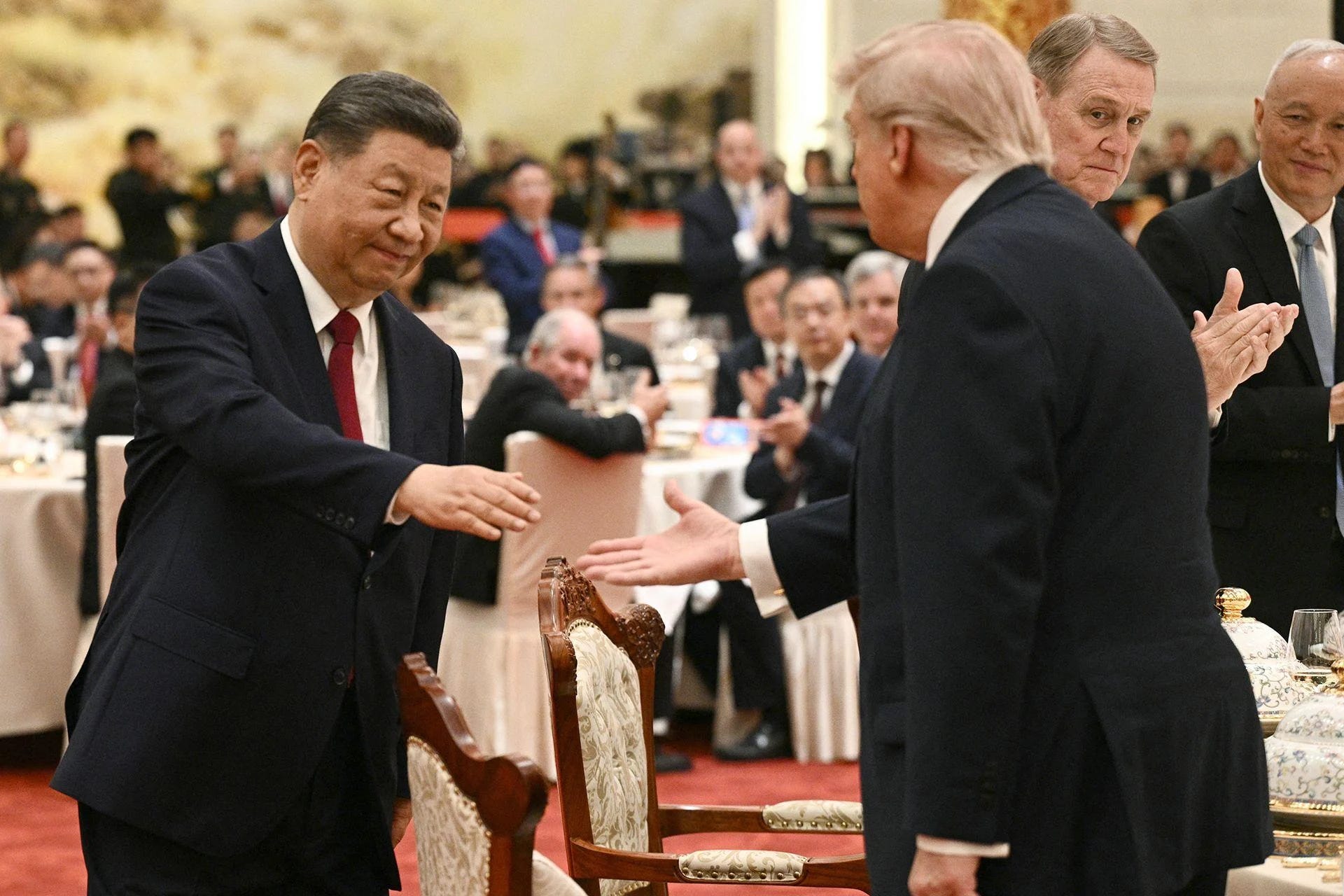
What Beijing agreed is a cold peace with Washington. What Trump does next with the forces in position is the call for the fortnight or so ahead.
Cold peace at Beijing and the Iran cleanup
Three Hormuz principles were agreed. Hormuz must remain open. No militarisation. No toll. Together with Iran must never have a nuclear weapon.
Rubio confirmed the Chinese position to NBC: “they are not in favor of militarizing the Straits of Hormuz, and they’re not in favor of a tolling system.” That is the strongest Chinese public statement yet against the Iranian toll architecture. I argued in A Hormuz Chokepoint Precedent that the toll precedent would likely not stay in the Gulf. Beijing has now thankfully publicly rejected it.
Xi told Trump China would not provide military equipment to Iran. The Caine “any vessel” doctrine I analysed in Any Vessel is also implicitly constrained.
Rubio confirmed Trump did not ask Xi for help on Iran: “we don’t need their help.” The summit principles feed a Bahrain-sponsored UN resolution with over 100 co-signers. The harder test is whether Beijing curbs Iranian oil purchases and votes for it. The operational follow-through is unproven.
Trump’s signal on Iran was different. He told reporters on Air Force One “we may have to do a little cleanup work.” Cleanup is kinetic language. He posted Friday that “the military decimation of Iran” is “to be continued!” Energy Secretary Wright told the Senate Armed Services Committee on 13 May Iran is “weeks” from weapons-grade enrichment, paving the optionality.
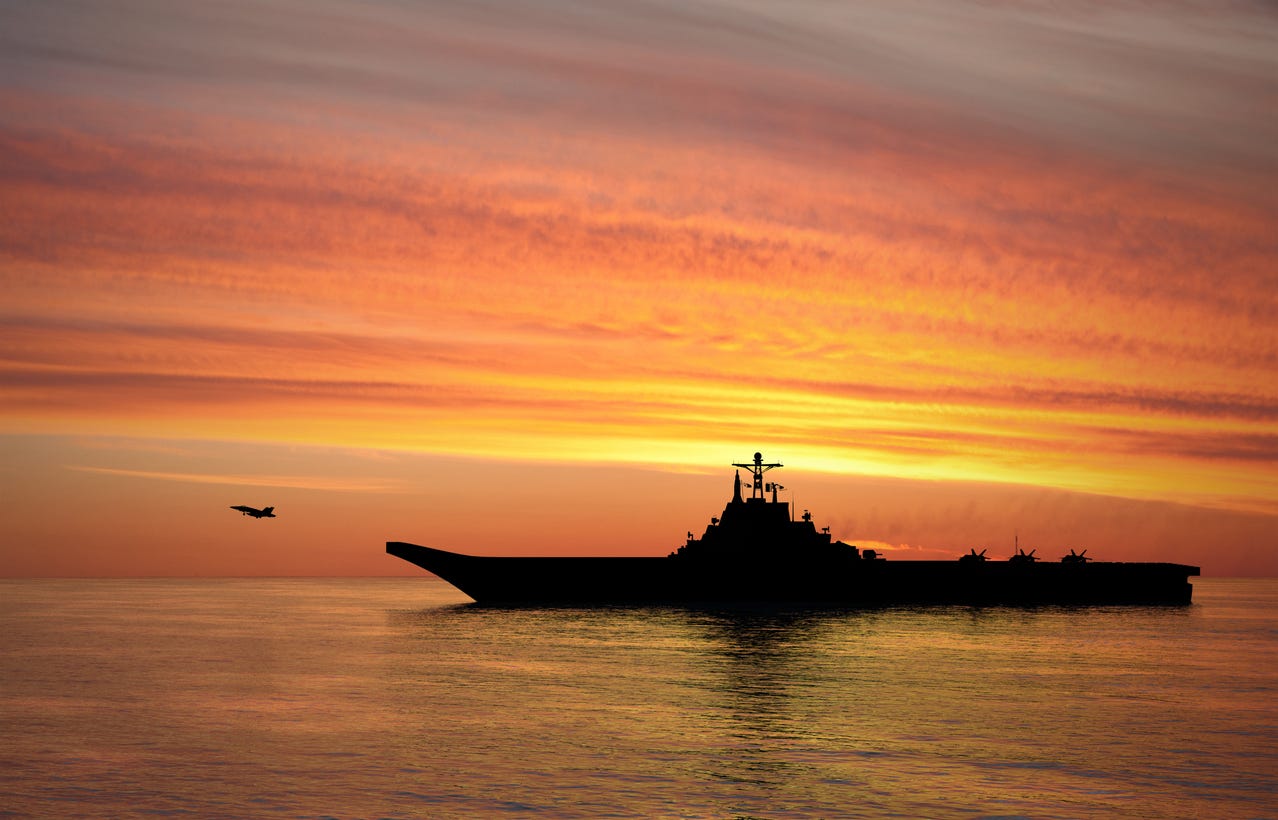
At Senate Appropriations on 12 May Hegseth told lawmakers the Pentagon has plans to escalate, retrograde, or shift assets. The Ohio-class ballistic missile sub moved to Gibraltar at the weekend. Three carrier strike groups remain in theatre.
The New York Times reported today that Pentagon contingency plans for renewed strikes are drawn up. Targets named: Iranian military infrastructure, underground nuclear sites, and Kharg Island, which carries 90 per cent of Iran’s oil exports. 5,000 Marines and 2,000 paratroopers from the 82nd Airborne are in the region awaiting orders. Joint Chiefs Chairman Caine told the Senate Armed Services subcommittee this week the military maintains “a range of options for our civilian leadership.”
Trump revealed on Air Force One that the bombing pause was arranged at Pakistan’s request, crediting Pakistan’s field marshal and prime minister, calling it “a favor to Pakistan.” He added “I wouldn’t have really been in favor of it.” The favor can be withdrawn.
The forces cannot be held into summer. Within three to four weeks the administration uses them or stands them down. Standing down without use inverts the deterrent signal for months.
Taiwan was Beijing’s other gain
Xi opened the trip with a warning about conflicts over Taiwan. “The last thing we need right now is a war that’s 9,500 miles away,” Trump told reporters on Air Force One on the way in. He questioned greenlighting the $14 billion weapons package after discussing arms sales in “great detail” with Xi. He dismissed the 1982 six assurances as outdated. Yet Rubio affirmed US policy unchanged. Trump referred to Lai Ching-te, Taiwan’s president, as “the person who is running Taiwan.” Japanese PM Takaichi’s hawkish line is now moving somewhat out of step with creeping US posture. Taiwan is Xi’s priority way more than Trump’s.
Iran on the ground
Iran’s economy is in freefall. The IMF projects 6+ per cent contraction with 70 per cent inflation. White House deputy press secretary Anna Kelly put Iran’s oil revenue losses at $500 million per day under Operation Economic Fury.
The IRGC sits dominant since Mojtaba Khamenei’s elevation. Foreign Minister Araghchi told reporters in New Delhi on Friday Iran “cannot trust the Americans at all.” Trump on his way home dismissed Iran’s latest proposal on Air Force One: “I looked at it, and if I don’t like the first sentence I just throw it away.”
The IRGC Navy expanded its definition of Hormuz on 12 May. On 16 May parliament’s national security commission head Ebrahim Azizi announced a controlled-transit plan with fees on cooperating vessels, closed to US “Project Freedom” operators.
Iran retains a 60 per cent enriched uranium stockpile. An MP threatened 90 per cent enrichment if attacked. The “Martyr Commander” exercise concludes within days. The nuclear clock keeps the cleanup option live.
The China valve takes pressure off
A second layer may take pressure off both sides. Trump told reporters on Air Force One that China takes “about 40 per cent” of its oil from the strait while the US takes “none.” US EIA data puts China at 37.7 per cent of crude flowing through Hormuz in Q1 2025. I estimate approaching half of Hormuz tanker traffic is China-owned, China-flagged, China-crewed, China-chartered, or China-bound. The JV Innovation, attacked on 4 May, was the profile. Marshall Islands flag. Chinese owner. Chinese crew.
If Beijing has or gets IRGC clearance for that tonnage regardless of flag, the blockade-versus-toll debate becomes secondary. The strait is selectively porous, functionally open for the traffic Beijing cares most about. Tehran preserves the appearance of closure. Beijing extracts the operational reopening it needs.
The headline blockade holds. The operational reality is partial. Partial reopening for China is the likeliest base-case outcome and unlikley will be contested by Pentagon assets.
Israel, UAE and Lebanon
Israel and the UAE operate from different strategic premises to Riyadh. The UAE quit OPEC effective 1 May after fifty-nine years. Ambassador Huckabee confirmed on 12 May that Israel sent the UAE an Iron Dome system and operating team via the Abraham Accords axis. MBZ welcomed Modi to Abu Dhabi on 15 May with a call for an “open and safe” Strait.
The Israel-Lebanon ceasefire was extended 45 days on 15 May after the first direct Israeli-Lebanese talks in decades. Hezbollah has largely abided. Israel struck Hezbollah sites in southern Lebanon today. The IDF plans to continue operations and ground occupation after the Iran war ends, per Yedioth Ahronoth.
Israel and the UAE will lobby Washington to treat any Saudi-Iran compact that ignores missiles, drones and proxies as structurally unsafe. The push is toward the hawkish US line even as Riyadh and Europe argue for a regime-safe shell.
Iran wants Lebanon included. The Lebanon front is one reason Tehran cannot trust the offer.
The Riyadh Compact is the long tail
Saudi Arabia has floated a regional non-aggression compact with Iran. European capitals are backing it, laregely in absence of other ideas. Pakistan, which mediated the failed April Islamabad Talks and remains the Iran-US back channel, ties to Riyadh via the 2025 mutual defence pact. The Compact preserves borders, non-use of force, sovereignty, economic cooperation, hotlines and verification. The civic and political provisions that turned Helsinki into a long-term solvent for authoritarian regimes have been engineered out. Riyadh is offering a regime-safe architecture.
The Compact has real depth. It is also vulnerable to a kinetic restart. It only gets operational space if Trump stands down without using the forces. That is the long-tail scenario.
The call: the binary
The choice is binary. Trump uses the forces and the kinetic option gets some more of the push to capitulation done. Or Trump stands down soon and the world muddles through with Hormuz almost shut for months. My call from The Two-Week Window three weeks ago stands. Iran’s deterioration accelerates the kinetic path. The China valve moderates it for Beijing alone. Tokyo, Seoul, Taipei, Singapore, Delhi, Europe and the GCC do not get the valve. The downstream impact on energy prices, GCC food supply, helium supply, semiconductor inputs, European industrial output, Asian fuel and LNG flows is the operating condition.
The signal is acute. The forces are positioned. The Trump in the room this week is the kinetic Trump.
Written this fine Saturday from Southport on the English north-west coast. The diplomatic Trump gave Beijing a framework. The kinetic Trump posted “to be continued” on Friday. The fortnight tells us which version governs.
The signal on this day is I’m afraid physical. It always was.
Ray Ferguson writes the Infinite Horizons Substack. Signal Stack covers geopolitics and markets. Tech Stack covers AI and technology. Full archive of past pieces. Ray is a chairman and international banker with 35 years of leadership across Asia, the Middle East, Europe and the Americas. Former CEO of Standard Chartered Americas, CEO of Standard Chartered Singapore and SEA, UAE and Oman, and Deputy CEO of Bank ABC, Bahrain. Chair of insurer Singapore Life and 36ZERO Marine Group. Singapore citizen, ocean sailor, board mentor, and author of the memoir Infinite Horizons: Seasons in the Sun: A Memoir of Leadership and Life.
If this was useful, share it with someone who needs to read it.
Join the conversation
Comments and replies take place on Substack, where Ray reads and responds.
INFINITE HORIZONS
Get each edition by email
Free. Delivered by Substack. Unsubscribe from any email.
Infinite Horizons is published by World Scientific and available now.
Buy the book