Iran Wins Hormuz, US Wins Ceasefire
Inside the 60-Day MOU to be announced today per Trump. No tolls. Sanctions waivers. Verbal nuclear commitments. Pakistan and Qatar brokered.
· 6 min read
Infinite Horizons · Signal Stack Weekend Edition · Ray Ferguson · Starigrad, Croatia · Sunday 24 May 2026
Dawn breaks over the Adriatic this Sunday morning. The news confirms the muddle is on.
Thursday’s Signal Stack “Iran Winning on Hormuz, Trump Muddles On” named the muddle as the equilibrium where nobody can sign, nobody can escalate, and nobody can walk away. Three days later, that equilibrium is hours from a possible signature. Trump put it at 50/50 to Axios on Saturday. Iran’s Fars News Agency dismissed his framing within two hours as “incomplete and inconsistent with reality.”
President Trump’s Truth Social statement on Saturday evening is the primary source for what comes next. The statement reads in part:
“I am in the Oval Office at the White House where we just had a very good call with [the leaders of Saudi Arabia, the UAE, Qatar, Pakistan, Türkiye, Egypt, Jordan, and Bahrain] concerning the Islamic Republic of Iran, and all things related to a Memorandum of Understanding pertaining to PEACE. An Agreement has been largely negotiated, subject to finalization between the United States of America, the Islamic Republic of Iran, and the various other Countries, as listed. Separately, I had a call with Prime Minister Bibi Netanyahu, of Israel, which, likewise, went very well. Final aspects and details of the Deal are currently being discussed, and will be announced shortly. In addition to many other elements of the Agreement, the Strait of Hormuz will be opened.”
Axios reporting supplies the operational substance of what the Memorandum contains. Pakistan’s Field Marshal Asim Munir brokered the text in Tehran across Friday and Saturday. Qatar provided the secondary mediation track. The Iranian endorsement that the Gulf chairmen channel could not extract over ten weeks came through Munir’s meetings with President Pezeshkian, Foreign Minister Araghchi, and Parliament Speaker Ghalibaf.
What’s in the deal
The architecture is a sixty-day MOU that is extendable by mutual consent.
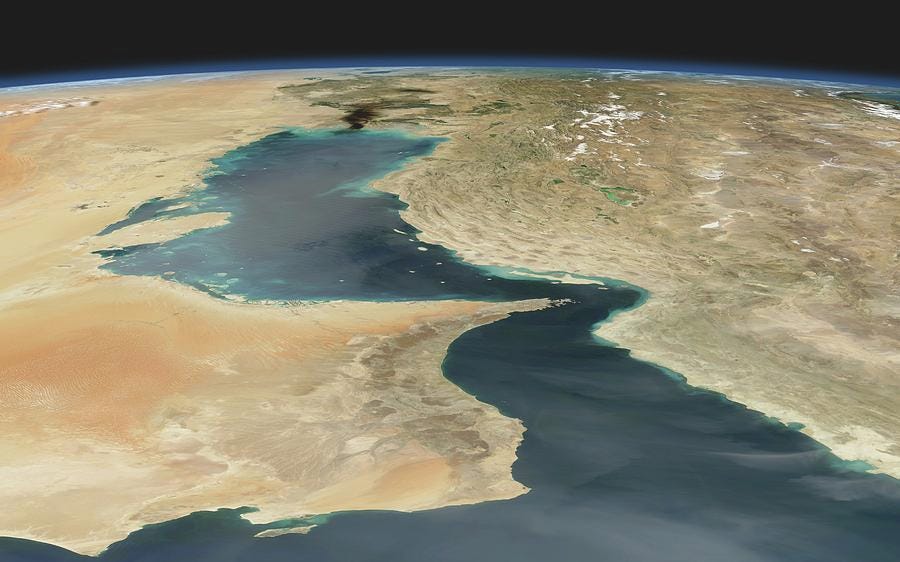
Iran first up clears the mines it deployed in the strait. The strait opens with no tolls during the sixty-day window. The United States lifts the blockade on Iranian ports and issues sanctions waivers permitting Iran to sell oil. Trump’s key principle is a canny “relief for performance.” Iranian funds remain frozen. Permanent sanctions relief follows tangible concessions.
The draft includes Iranian commitments to never pursue nuclear weapons and to negotiate suspension of uranium enrichment with removal of the highly enriched uranium stockpile. Two sources told Axios that Iran’s nuclear concessions exist as verbal commitments through Pakistani and Qatari mediators rather than as written deal terms. The United States will negotiate sanctions lifting and unfreezing of Iranian funds during the sixty-day period, with implementation only as part of a verifiably implemented final agreement.
United States forces mobilised in recent months stay in the region during the sixty-day period. Withdrawal is conditional on a final deal.
The Lebanon-Israel front is inside the MOU. The Israel-Hezbollah war ends. Netanyahu raised concerns to Trump on Saturday in apparently respectful and deferential terms. The conditionality is operational. The United States official summary line is “If Hezbollah behaves, Israel will behave.”
The reporting test
The Axios account is unusually detailed and source-attributed. Three points warrant testing as the deal moves to signature.
The first is the toll suspension. The Institute for the Study of War’s May 23 analytical piece “How Iran Hopes to Control the Strait of Hormuz” named Iran’s primary objective as sovereignty over the strait rather than fees. Iran lifting tolls during the sixty-day window is a commercial concession that does not in itself surrender sovereignty.
The chokepoint sovereignty thesis advanced in the Signal Stack “A Hormuz Chokepoint Precedent” of 11 April and developed across the Signal Stack “Any Vessel” of 25 April reads the structure rather than the cosmetics. Iran’s Fars News Agency responded within two hours of Trump’s Truth Social post that in the event of an agreement, the Strait of Hormuz will remain under Iranian management. The toll deferral is commercial. The sovereignty claim is preserved on the public record before the ink is dry.
The second is the verbal nuclear commitment. Verbal commitments through mediators do not bind. Written deal terms bind. Iran has retained negotiating optionality on the question that matters most to Washington. The framework’s phase two depends on Iran honouring verbal commitments under a clock that suits Tehran more than it suits the United States.
The third is the Hezbollah clause. Netanyahu’s concerns make sense. Israel’s tactical operational space against Hezbollah narrows during the deferral window. The “if Hezbollah behaves” formula provides a return path but the threshold is undefined. Israeli intelligence on Hezbollah rearmament during the sixty days becomes the most consequential variable in the deal’s endurability.
The Asian read
The deal is positive in the immediate term. The strait opens. Tolls suspended. Asian refinery feedstock returns. Petrochemical sector operating capacity begins recovery through the second half of the year. The Lloyd’s syndicates lift the war exclusion within days. Brent settles.
The deal carries structural concerns to sit with. Pakistan’s elevation as primary mediator is a geopolitical shift to monitor closely. The bilateral chokepoint deal-making precedent is problematic. The Iran-Oman bilateral arrangement reported by Bloomberg and The New York Times this week sits in the background as the parallel architecture.
The deal does not change the Asian resilience build that has become the operating baseline since March. The diversification work will continue apace. The post-war Gulf is not the pre-war Gulf. The Signal Stack “Rebuilding the Room” of 29 April named that condition. The framework deal confirms it.
Welcome the immediate relief. Maintain the resilience build. Read the chokepoint precedent honestly.
The endurability
The framework’s half-life sits in three constraints.
Iran has near-term commercial incentive to make sixty days look like working diplomacy. Mine clearing, toll suspension, oil sales returning all provide visible Iranian compliance during the first thirty days. The breakage point arrives at day thirty-one. Phase two nuclear is where the IRGC’s institutional preference for HEU retention meets American insistence on dismantlement. Axios reports the United States could end the deal before sixty days if Iran is judged unserious about nuclear negotiations.
Israeli restraint is the second constraint. The IDF’s institutional position is that any Iranian highly enrich uranium retained beyond a defined threshold constitutes a casus belli. Verbal Iranian commitments during the sixty-day deferral leave that threshold ambiguous. Israeli intelligence disclosure during phase two could force a United States response the framework was designed to avoid.
The petrodollar reading is the third. The deal removes commercial toll collection. It does not reverse the structural petrodollar face loss. The Institute for the Study of War’s May 23 analysis puts the institutional pushback in writing. If negotiations do not lead rapidly to an agreement to reopen the strait under the previous internationally recognised transit scheme, ISW writes, it will unfortunately be necessary to resort to force. The framework Trump is finalising does not return to the previous scheme.
The framework holds through autumn on this reading. Breakdown most likely runs through phase two nuclear discussion in July through September. The most likely path is renewal for another sixty days while structural questions remain unresolved.
The close
The muddle is signing. Iran wins the structural question of who controls the strait. The United States wins the political question of who ended the war. Israel banks the Hezbollah ceasefire and hopes phase two delivers what Saturday’s MOU does not. Pakistan banks the diplomatic standing. Singapore banks the strait reopening and watches the precedent.
The text matters more than the signature.
Ray Ferguson writes the Infinite Horizons Substack. Signal Stack covers geopolitics and markets. Tech Stack covers AI and technology. Full archive of previous Signal Stacks. Ray is a chairman and international banker with 35 years of leadership across Asia, the Middle East, Europe and the Americas. Former CEO of Standard Chartered Americas, CEO of Standard Chartered Singapore and SEA, UAE and Oman, and Deputy CEO of Bank ABC, Bahrain. Chair of insurer Singapore Life and 36ZERO Marine Group. Singapore citizen, ocean sailor, board mentor, and author of the memoir Infinite Horizons: Seasons in the Sun: A Memoir of Leadership and Life.
If this was useful, share it with someone who needs to read it.
Join the conversation
Comments and replies take place on Substack, where Ray reads and responds.
INFINITE HORIZONS
Get each edition by email
Free. Delivered by Substack. Unsubscribe from any email.
Infinite Horizons is published by World Scientific and available now.
Buy the book