

Is the Strait of Hormuz a Depreciating Asset? Signal Stack Special Contrarian View?
Iran won the Strait of Hormuz. The world is already routing around it. That matters in the great powers game.
· 6 min read · 1 comments
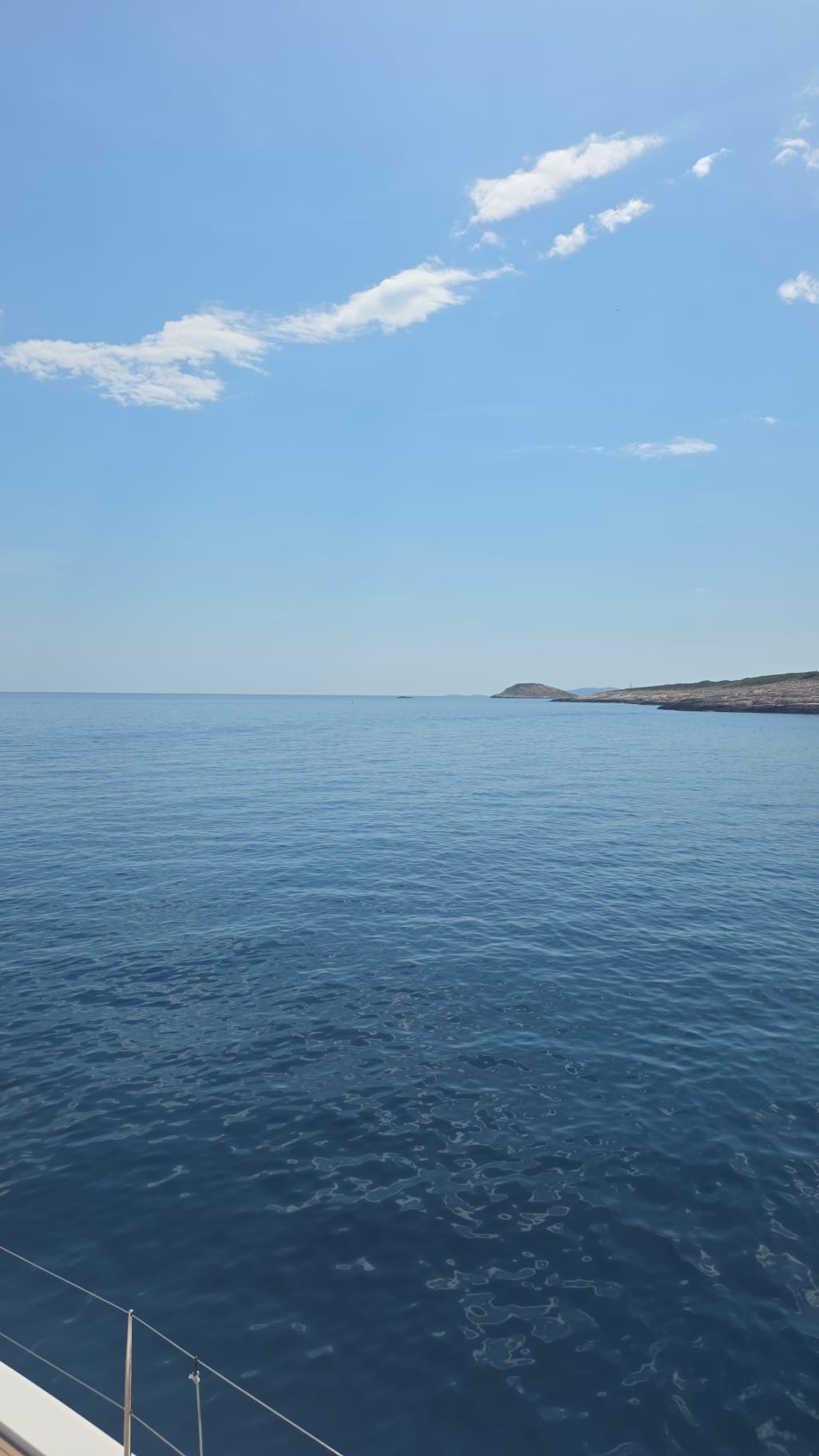
Infinite Horizons · Signal Stack · Ray Ferguson · Hvar, Croatia · Thursday 28 May 2026
The Adriatic near Hvar is flat calm seas this Thursday afternoon as I put this together, and so, oddly, are the energy markets. That calm may be the most telling signal of the conflict.
Three months and more into the Hormuz disruption, the downstream catastrophe the press narrative promised has not arrived. Asian refiners were supposed to be starved of feedstock, petrochemical plants idling, the semiconductor industry rationing helium into crisis. Some of that strain is real. Most of it is milder than forecast. A set of signals points one way, and if they hold they invert the consensus reading of the conflict.
The premium collapsed
The clearest signal sits in the crude market structure. The International Energy Agency’s May report records that Dated Brent’s premium to ICE Brent futures fell from a record $35 a barrel in mid-April to $3 by early May. The scarcity that drove the spring panic drained out in three weeks.
The mechanism was demand destruction running ahead of supply loss. Global refinery throughput fell around 5 million barrels a day year-on-year in April, with Japan down 1.9, Korea down 1.0, India down 0.76. Global oil demand is set to contract 2.4 million barrels a day in the second quarter. The EIA now sees Brent averaging $79 across 2026 and $64 in 2027.
In the Signal Stack “Reading Chokepoints” on 23 April I traced how chokepoints became instruments of economic warfare. A chokepoint matters only to the degree the world cannot route around it. That assumption is now in question.
The helium tell
Helium is the sharper test, because it is harder to substitute than crude. Qatar supplied roughly a third of global helium, and Ras Laffan going offline for a whie ahead removed up to 38 per cent of world output.
The adaptation has begun, though whether alternative supply scales quickly enough is the open question. North American Helium is expanding in Canada, the Amarillo reserve is drawing down, Samsung and SK Hynix have secured US supply, and China is building domestic extraction. The near-term market stays tight, and that tightness is the forcing function. The durable shift is that geography becomes the premium. Asian fabs that can no longer lean on a single Gulf chokepoint will look closer to home, and emerging Australian helium provinces sit naturally on that map.
The depreciating asset
The chokepoint is losing value because it is being fought over. That is the inversion.
Every month the strait stays contested, three things compound. Demand destruction hardens into permanent efficiency. Alternative supply gets built and stays built. The Gulf’s share of the global energy and helium market falls. The criticality that drove the panic is funding the diversification that erodes it.
This reframes the question of who won. I argued in the Signal Stack “Iran Winning on Hormuz” on 21 May that Iran was taking this round, and Gideon Rachman wrote this week in the Financial Times that “Iran is beating Trump at the art of the deal”. On the terms of the negotiation that is right. Iran preserved sovereignty over the strait through the permission architecture and the mine threat. Iran won the strait, and the strait is a depreciating asset. The longer Tehran holds it, the less it is worth, and the geography that traps Iran traps the whole Gulf with it.
There is a historical rhyme. Denmark levied the Sound Dues on ships passing the Øresund for four centuries, until the world refused to keep paying and the toll was abolished in 1857. A chokepoint is only as valuable as its users’ willingness to remain dependent. Hormuz under Iranian permits is testing that willingness, and the answer is arriving in the demand figures and the shipping lanes. The Cape of Good Hope now carries roughly as much oil as Suez and Bab el-Mandeb combined, the clearest sign the world is already routing around the region.
The read is not mine alone. A small analytical current is converging on it, asking whether this is the twilight of the Hormuz hegemony and arguing the system has already broken whatever the ceasefire delivers.
The winners and the losers
The structural ledger runs against the Gulf. The GCC and Iran sit on the same waterway, and the world is learning to need it less. Iran’s campaign has battered Gulf ports and refineries, so the region takes physical damage on top of the market it is losing. Saudi Arabia, the UAE, Qatar, and Iran are the long-term losers of a contest one of them nominally won.
The fiscal arithmetic deepens the bind. The IMF puts Saudi Arabia’s budget breakeven near $90 a barrel. Bloomberg Economics sets it at $94, rising to $111 once Public Investment Fund spending is counted. The EIA’s $79 average for 2026 and $64 for 2027 sit below every one of those marks. The Gulf is losing market share and running structural deficits at once, and the price the diversification drives toward breaks the Vision 2030 financing model.
The United States is the quiet structural winner. American crude output is rising toward 13.6 million barrels a day. The US holds the world’s largest helium reserve at Amarillo. US LNG is filling the space Qatar vacated in European and Asian gas. Washington gains share in every commodity the Gulf is failing to deliver. This is the canny explanation for why Trump can tough it out. At his cabinet this week he dismissed the pressure directly, saying Iran expected to outwait him and “I don’t care about the midterms.” He faces no forcing function to concede. Trump has time and says so, and the muddle I traced through the spring simply continues, now tilted toward the side whose supply is rising.
Asia carries the near-term pain and the long-term gain. Tokyo, Seoul, and Singapore absorbed the feedstock squeeze and are building the diversified supply base that cuts their Gulf exposure for a generation. India sits more awkwardly, balancing Russian crude, GCC ties, and its own refining ambitions. The resilience trades that looked defensive in March look strategic now.
The counter-case deserves a hearing. Asian governments have called for diversification after every Gulf shock for fifty years, and dependence has returned each time once prices fell back. The helium crisis in particular may be delayed rather than avoided. Gulf sovereign balance sheets can also subsidise customer loyalty through the dip, as Saudi Aramco’s pricing of Asian crude has done for forty years. The substitutions stick only if Asian buyers accept paying a premium for diversification. The wager is that price, fiscal strain, and permanent new capacity make this cycle different.
The close
This continues a call I made on 29 April. “Rebuilding the Room” argued that Asia’s resilience planning was permanent, that GCC competitiveness faced lasting disfigurement, and that supply chains would route around the Gulf. The structural direction holds, and the May data confirms it. On the near-term severity I read it too high. I wrote that downstream pain would broaden through the summer. It did not, because demand destruction outran the supply loss faster than I modelled. If the read is right, Iran beats Trump at the deal and loses the strait anyway, because the strait is worth less every week the war continues. The press narrative places the chokepoint at the centre of the global economy. The signals suggest the market is quietly routing it to the edge.
The calm on the screens this afternoon may be the early sound of the world deciding it can manage without the Gulf. That is the signal all should deem worth watching.
Ray Ferguson writes the Infinite Horizons Substack. Signal Stack covers geopolitics and markets. Tech Stack covers AI and technology. Full archive of previous Signal Stacks. Ray is a chairman and international banker with 35 years of leadership across Asia, the Middle East, Europe and the Americas. Former CEO of Standard Chartered Americas, CEO of Standard Chartered Singapore and SEA, UAE and Oman, and Deputy CEO of Bank ABC, Bahrain. Chair of insurer Singapore Life, 36ZERO Marine Group, and ESGpedia, Asia’s leading ESG data and technology company. Singapore citizen, ocean sailor, board mentor, and author of the memoir Infinite Horizons: Seasons in the Sun: A Memoir of Leadership and Life.
If this was useful, share it with someone who needs to read it.
Join the conversation
Comments and replies take place on Substack, where Ray reads and responds.
1 comments so far.
INFINITE HORIZONS
Get each edition by email
Free. Delivered by Substack. Unsubscribe from any email.
Infinite Horizons is published by World Scientific and available now.
Buy the book

