The Strategic Petroleum Reserve is the Next Depreciating Asset
US Navy strikes Iranian radar. Missile barrage on Kuwait. Tehran rejects Trump-Khamenei talks. The buffer runs off. The depreciation hardens.
· 6 min read · 1 comments
Infinite Horizons · Signal Stack Weekend Edition · Ray Ferguson · Paris · Saturday 6 June 2026
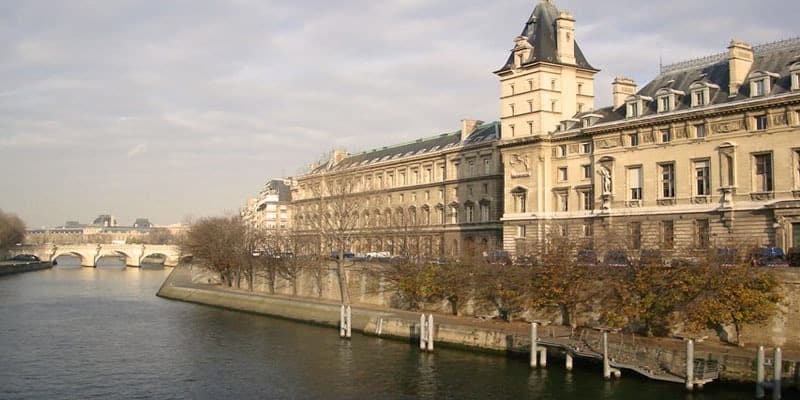
Saturday afternoon at a Paris café. The weekend papers carry Friday’s red rout. The week that opened with Iran’s missile barrage on Kuwait ends with US equities down roughly a trillion on the week, the Nasdaq off 4.7 per cent on Friday, Brent at $93. Signal Stack named the frame on 28 May in “Is the Strait of Hormuz a Depreciating Asset?”: Iran wins the chokepoint while losing the prize. The chokepoint logic “Reading Chokepoints” traced in April now prices crude, rates, and the architecture of trade together.
The wider order strains
The depreciation does not stop at the strait. The Cape of Good Hope has stopped being a workaround, its normalising track. Peak rerouting touched two-thirds of long-haul traffic. Hapag-Lloyd and Maersk have institutionalised the Cape route. Lloyd’s has rewritten war exclusions. P&I clubs have repriced. The cost flows into shipping rates, refining margins, and inflation prints the ECB cannot answer.
Germany’s industrial base lost both its Russian gas and Gulf crude anchors in last eighteen months. The G7 communiqué in two weeks will reference shipping security and energy resilience. It will stop short of recognising that the maritime order the G7 presided over for decades is being rebuilt around a very different geometry. Riyadh holds the formal seat without GCC unity. Abu Dhabi has exited OPEC and pivoted toward Beijing. US convening authority is depreciating alongside the SPR.
The French stake reads fresh from this side of the Channel. The Charles de Gaulle carrier group sits pre-positioned off the Arabian peninsula. The 40-nation Hormuz coalition Paris and London co-lead awaits concertation with Tehran and Washington. Iran warned French and British warships near the strait would face a “decisive and immediate response”. Macron walked back to “coordination with Iran”. The European order strains in advance.
The SPR is running off
The cost in Washington is mechanical, sharper than last week’s piece allowed. The 28 May call read the US as the quiet structural winner with time on its side. The SPR figures cause a pause to consider that the advantage is much narrower.
The Strategic Petroleum Reserve fell 8 million barrels in the latest EIA print to 357 million barrels, the lowest since 2004 per the Financial Times. The releases since March are running as an exchange programme. The DOE has booked around 170 million barrels of announced exchange volume through summer, against repayment in kind across 2026 to 2029, at an effective 18 to 24 per cent premium. The barrels are an oil-denominated bond issued at high yield. The depreciating-asset thesis applies to the Reserve itself.
Coverage measured against net imports has fallen from around 125 days at end-2025 to around 108 days now. The buffer above the 90-day IEA minimum is around 60 million barrels. Hurricane season began Monday. The EIA’s May Short-Term Energy Outlook pencils Brent at $95 for 2026 and $79 for 2027 on the assumption Hormuz begins to reopen in late May. That assumption no longer holds.
The vulnerability sharpens through July and August. Commercial inventories typically draw down through summer, and the SPR exchange has committed forward supply. If kinetic exchanges intensify or an Atlantic hurricane hits Gulf production, Brent at $120 is on the table. The depreciation can compound through a cyclical spike that punctures demand on top of the structural rerouting.
The transmission is mechanical. Brent toward $120 puts US gasoline above $4 a gallon through the summer driving season. CPI prints reprice. The Fed cannot cut into an energy-led inflation reading. The yield curve stays restrictive. The dollar strengthens, which pushes emerging-market energy importers into a second hit. The Trump administration enters midterm-year October with fuel costs leading the inflation print and policy boxed. Economic risk is asymmetric to the upside.
What underwrites the depreciation
The chokepoint depreciates because the muddle Signal Stack “Iran Winning on Hormuz, Trump Muddles On” named on 21 May has sharpened into a three-cornered stalemate no actor can exit. Washington cannot accept a deal leaving Iran sovereign over the strait. Tehran cannot surrender the kinetic track delivering its most concrete strategic gain in decades. Jerusalem cannot accept a ceasefire that leaves Hezbollah armed.
The constraint inside the stalemate is the American political clock. Trump cannot concede the strait without base defection, cannot escalate to regime change without forever-war optics, and cannot stall because the SPR cushion is running off. Each week the muddle holds, the room thins.
Lebanon is the structural deal-breaker. Iran requires Hezbollah armed. Israel requires Hezbollah disarmed. Washington has lost direct operational influence over Netanyahu. Any Iran-US framework is exposed to an Israeli decision Washington cannot constrain. Lebanon is the lever that breaks any Hormuz deal.
The kinetic rhythm runs in abbreviated episodes. Wire reports placed a US Hellfire on a Kharg-bound tanker Wednesday, Iranian strikes on the Kuwait helicopter base killing one and wounding 63, and Friday’s US Navy strikes on Iranian radar at Goruk and Qeshm. Markets price each pause as resolution. The clusters are one operating mode.
Public mediation has stalled. Iran told CNN in Tehran on Friday the talks are deadlocked and the ball is in Trump’s court. Trump said he would be “honoured” to meet Khamenei. Tehran ruled it out. Islamabad, Oman and Qatar ran public back-channels in April. The visible track is dormant. Quieter channels almost certainly continue.
The consolidating reality at the strait is de facto Iranian control over transit access, framed by Tehran as bilateral with Oman. Oman’s stance on the framework remains opaque. Iran’s transit registry has logged around 300 non-Iranian vessels since April. War-risk premiums sit at 5 to 10 per cent of hull value, from below 0.25 per cent pre-war. Saudi Arabia’s fiscal breakeven sits near $86 per the IMF in June, with output 3.4 mb/d short of its OPEC+ quota while the strait is obstructed. Each is depreciating in parallel.
The depreciation hardens
The depreciation compounds across the architecture: Iranian permits over physical flow, the Cape route over maritime trade, the SPR exchange programme over the strategic buffer, US convening authority over diplomacy.
The first is that bunker, insurance and ship-finance positioning at the eastern end of the chain matters more than any cable from Brussels or Washington. The Cape architecture needs more working capital, higher P&I, and more yuan-and-dirham trade finance. The eastern hubs that move first capture the institutional flow.
The second is that the convening authority depreciating in Washington opens space for maritime trading states to coordinate. UNCLOS holds. The Beijing multilateral consolidation in May was the institutional response. Asia’s diplomatic capacity is the inheritance the moment calls on.
The third is that the SPR exchange programme is a tradable signal. The United States is issuing oil-denominated paper at 18 to 24 per cent yield to its own future self. Anyone funding inventories cheaper has a structural carry. Asian state oil companies are doing exactly that. The geopolitics is commentary.
The Financial Times’ Gideon Rachman wrote in late May that Iran is beating Trump at the art of the deal. The institutional analytical read converges on what Signal Stack named in April in “A Hormuz Chokepoint Precedent”. Time was the asset on Washington’s balance sheet at the start of the contest. Time has now joined the strait, the SPR, and the convening authority on the depreciation side of the ledger.
The muddle was meant to be a holding pattern. It is a depreciating one. The economic risk now runs ahead of the political clock. Evian in June and the G7 will catch only some of this. The depreciation runs on.
The ledger is the signal.
Ray Ferguson writes the Infinite Horizons Substack. Signal Stack covers geopolitics and markets. Tech Stack covers AI and technology. Full archive of previous Signal Stacks. Ray is a chairman and international banker with 35 years of leadership across Asia, the Middle East, Europe and the Americas. Former CEO of Standard Chartered Americas, CEO of Standard Chartered Singapore and SEA, UAE and Oman, and Deputy CEO of Bank ABC, Bahrain. Chair of insurer Singapore Life, 36ZERO Marine Group, and ESGpedia, Asia’s leading ESG data and technology company. Singapore citizen, ocean sailor, board mentor, and author of the memoir Infinite Horizons: Seasons in the Sun: A Memoir of Leadership and Life.
If this was useful, share it with someone who would benefit.
Join the conversation
Comments and replies take place on Substack, where Ray reads and responds.
1 comments so far.
INFINITE HORIZONS
Get each edition by email
Free. Delivered by Substack. Unsubscribe from any email.
Infinite Horizons is published by World Scientific and available now.
Buy the book