Taking the High Road to a Wedding in Bath
My son marries today, in a church the Luftwaffe once bombed for its beauty. My own flight in threaded a corridor drawn by the same war I write about each week.
· 8 min read · 3 comments
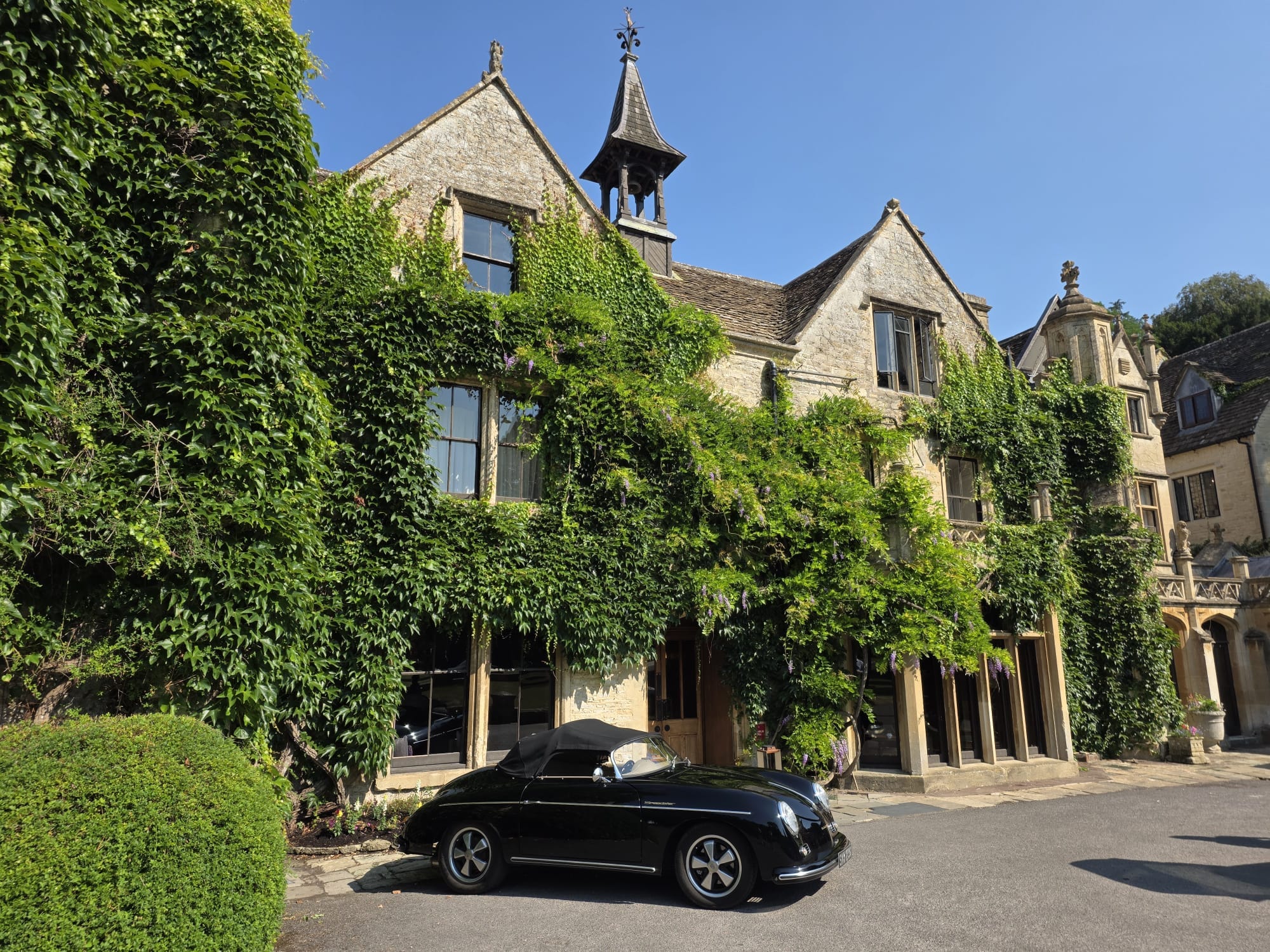
Infinite Horizons · Ray Ferguson · Castle Combe, Wiltshire · 11 July 2026
I published a piece on Wednesday called A Ceasefire, Three Missiles and a Funeral. It closed on a line I have been turning over since: access everywhere is being repriced, and the economies that thrive through this are the ones holding reserves, second sources, and routes that avoid the switch. I wrote that the other day from my desk in Singapore, evidence first, judgment plain, nothing personal in it at all.
This weekend’s edition breaks from that pattern, unapologetically.
It is reflective. It is personal. The straits and the ceasefires are still here, further down.
This one starts with a wedding.
I am writing this early, from Castle Combe, which has stood in this fold of Wiltshire since before anyone thought to write the date down. The ceremony later is a short drive away, at St John the Evangelist in Bath. The site is older than the church. King Edgar was crowned there in 973, the precedent for every English coronation since, including the late Queen’s. The building dates to 1863, and was bombed on 27 April 1942, in raids the Luftwaffe chose deliberately for cultural value alone. A priest died. So did the housekeeper and three parishioners. The south aisle came down entirely. The church was resolute about it, stubborn past the point good sense would advise, and rebuilt itself. A line in Latin over the door still records what happened. It has been marrying people again for eighty years.
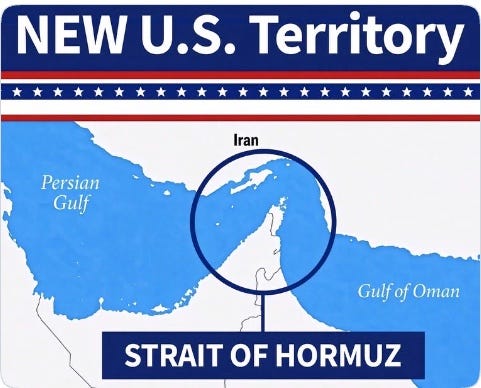
Most of this piece was written at altitude, thirteen hours from Singapore, on a flight that took what the pilots still call the high road, an air corridor north of Iran and Iraq and south of airspace closed to most carriers since the Ukraine war. A thin ribbon of sky that barely existed a year ago. I watched the route bend further north than it would have bent five years back, threading a gap that narrows every time I fly it.
Over the past day the marquee went up in the field below, canvas settling under a sky that has stayed cloudless for a stretch rare enough here that everyone keeps remarking on it. A proper heatwave, the kind England gets once a decade and never quite believes even while living through it. Highland dress arrived for a good number of the men, kilts of same tartan worn by families for centuries. Guests landed from twenty-five countries, converging on a valley most had never heard of a year ago. My son marries today.
Two clocks
An alert is waiting on my phone about today’s deadline in Muscat, about whether Iran will renounce firing on tankers before the day is out, about whether a ceasefire that has already broken once survives its own Saturday. That clock has run all this year, and I have written about it seriously, because it deserves that. I checked it once before writing this and felt the strangeness of both dates falling on the same date.
But there is an older clock here, running since long before straits had names, since long before Bath had a name either.
Later today my son will walk into that church with his best man and wait for his bride to arrive. Two people will promise each other something neither can fully guarantee. No memorandum of understanding, no naval patrol standing off the coast.
Just the two of them, and whatever they decide to keep choosing.
The kilts are their own small proof of the same idea. Nobody has to keep dressing their sons this way, generation after generation.
They do it because they keep choosing to, and the choosing turns a costume into a tradition. There is an old Scottish song about taking the high road and the low road, about two people parting and promising, against no guarantee at all, to meet again. My flight plan borrowed the phrase without meaning to. The song got there first. The twenty-five countries in this valley prove something related: none of those guests are bound to be here by anything stronger than relationships kept renewed across every distance modern life put between them. A guest list like that is built, one kept promise at a time.
I have spent thirty-five years around institutions that manage the first clock, the one that runs on treaties and reserves. This morning I am standing inside the second one.
They run on the same fuel.
What I would actually say to him
My son works in frontier AI by day. He completed his National Service in the Singapore Armed Forces and remains, as a reservist, liable to be called to fight if the country ever needs him, one part of the standing obligation a small nation’s entire deterrence depends on. Between the two he touches almost everything I have spent this year writing about. He helps train the AI systems a government somewhere can switch off inside twenty days. He also carries, quietly, a different kind of readiness, one that asks nothing of him yet and could ask everything in the wrong week. That changes what I owe him, more than it changes anything I write for a board chair or CEO.
The discipline I suggest to boards is simple: know what you depend on, know who can switch it off, never assume the arrangement holds because it held yesterday. What I would actually tell my son, over a pint instead of in print, is the harder version.
Nothing you build starting today runs on autopilot, not the marriage, not the service you already give. Every good thing I have watched hold has held because someone kept choosing it on the inconvenient days, not because it was signed once and left to run.
He does not need me to explain that peace is not automatic, or that access is never permanent. His work is the proof of both, from two directions at once, in ways I only get to analyse from a desk.
The philosophical turn
This is not a metaphor reached for to make a wedding column work. It is the actual shape of the thing. A ceasefire is not a fact you bank and forget. It is a fact you renew, daily, under pressure, by people who could choose otherwise and do not. I have written that sentence about Hormuz, about Malacca, about the law of the sea, and I stand by it as analysis. But it was never really about straits. It is about what peace is, between neighbours, between nations, or between two people standing in a Bath church this afternoon.
St John’s is the proof I keep returning to. A German air force, choosing beauty over strategy, put a bomb through that church and killed the people inside it, including its priest. The congregation did not rebuild by assuming quiet was the natural state of the world. They chose it, stone by stone, against every reasonable argument that the site had already given its history and owed nothing further. That habit can be lost. I have spent a year documenting places where it is being tested.
I think of my own thirty-five years in business the same way now, though I did not think of them this way while living them. A career, like a marriage, like a rebuilt church, is not built once and coasted on. Every institution I steered through a hard year, every relationship kept in repair across a decade of distance, was a renewal, not an inheritance. I only see the pattern now, watching a marquee take shape yesterday for the party that follows the moment that matters, a few miles away, in a much older room.
The world does not announce these changes on the day they happen. It narrows one bulletin at a time. The corridor my flight threaded did not close in a single week. It closed advisory by advisory, over months I spent writing about the war that caused it, without noticing the war had redrawn the sky above my own journey home. You see the change only when you look at the route and realise how far the line has bent since you last flew it.
What I hope for him
I hope the marriage he begins today becomes exactly that kind of habit, so consistently renewed it eventually looks like it was never a choice, just a fact of the world. That is what holds well looks like from a distance, an inevitability. Up close it was always a decision, made again, by people who could have chosen otherwise.
The analysis resumes soon. A deadline in Muscat. A president threatening a civilisation. A strait deciding what it costs to cross. A funeral procession that reached Mashhad two days ago. I will be back at the desk before the week is out, treating every dependency as something renewed, never assumed.
But not yet. The marquee stands finished. The kilts hang pressed. Guests from twenty-five countries are waking in this village or still landing. The English sky, against every expectation this country ever taught me to hold, is simply blue, and shows no sign of changing its mind. I will take that as an omen I do not entirely believe in and will not entirely dismiss either.
Later today there will be a different kind of renewal to watch. The oldest kind. In a church that was destroyed once and chose, thrawn to the last stone, to stand again. My son will be standing in it. Our families and friends here present will get to see it made.
Ray Ferguson writes the Infinite Horizons Substack. Signal Stack covers geopolitics and markets. Tech Stack covers AI and technology. Each edition is written plainly, for board-level readers, with evidence ahead of opinion and no patience for jargon. Full archive of previous Signal Stacks. Ray is a chairman and international banker with 35 years of leadership across Asia, the Middle East, Europe and the Americas. Former CEO of Standard Chartered Americas, CEO of Standard Chartered Singapore and SEA, UAE and Oman, and Deputy CEO of Bank ABC, Bahrain. Chair of insurer Singapore Life, 36ZERO Marine Group, and ESGpedia, Asia’s leading ESG data and technology company. Singapore citizen, ocean sailor, board mentor, and author of the memoir Infinite Horizons: Seasons in the Sun: A Memoir of Leadership and Life.
Join the conversation
Comments and replies take place on Substack, where Ray reads and responds.
3 comments so far.
INFINITE HORIZONS
Get each edition by email
Free. Delivered by Substack. Unsubscribe from any email.
Infinite Horizons is published by World Scientific and available now.
Buy the book