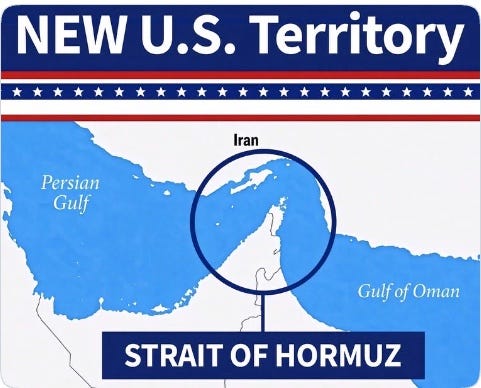
The Water They Are Not Drinking Part 2
Why Bushehr’s Real Risk Is the Lights Going Out
· 2 min read
On Sunday I published a piece on Substack on a risk that was not being talked about. While the world focused on oil prices and Hormuz, I wrote about what a Bushehr incident would actually produce, not in Iran but in the Gulf capitals that depend on desalination for their existence.
Thanks for reading! Subscribe for free to receive new posts and support my work.
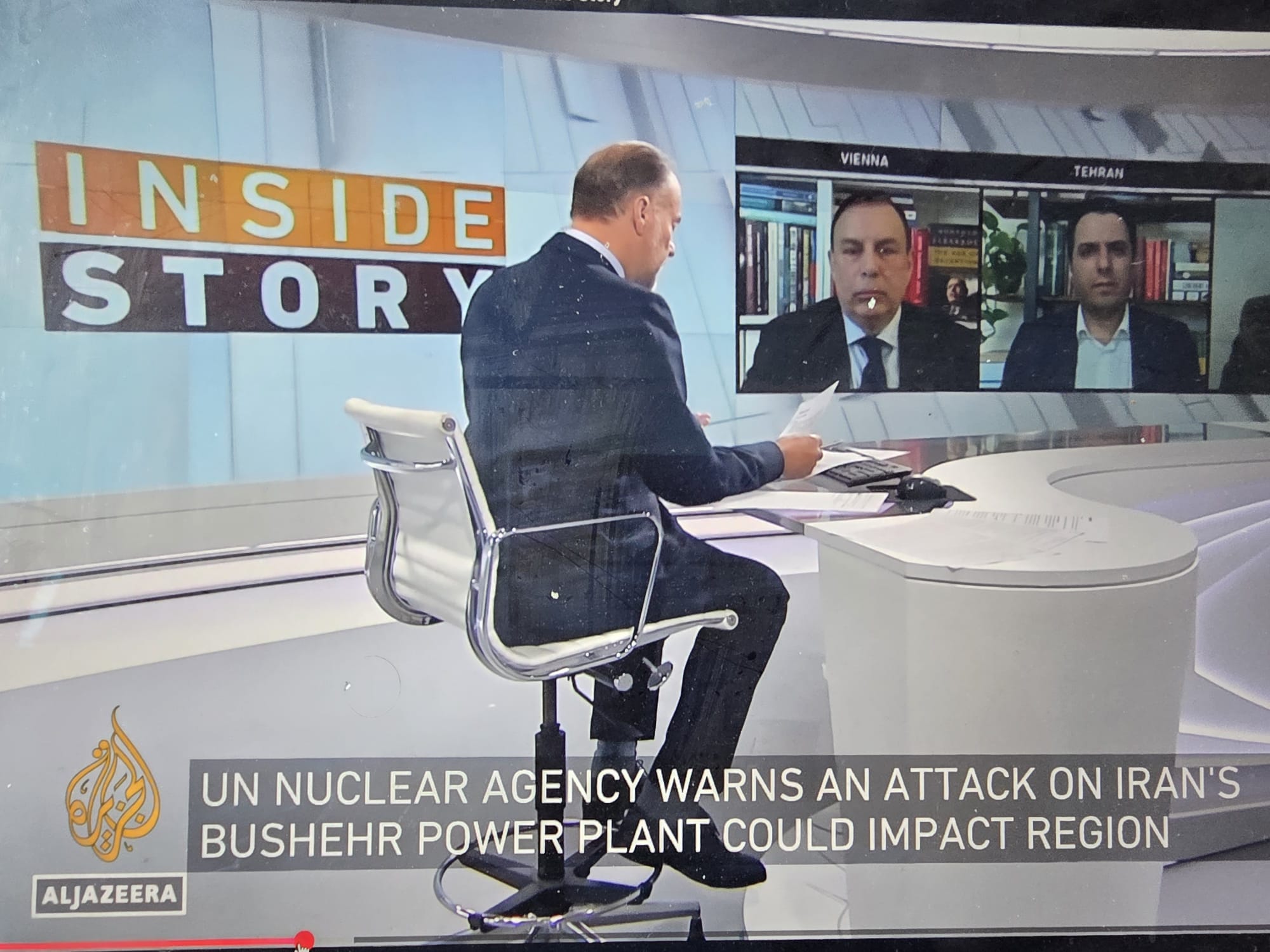
Al Jazeera’s Inside Story has now brought the issue the audience it warrants, with a former IAEA verification chief, a nuclear weapons policy analyst and a regional expert examining what four strikes on Bushehr’s perimeter actually mean. The episode is worth 27 minutes of anyone’s time:
https://www.aljazeera.com/video/inside-story/2026/4/6/why-is-irans-bushehr-nuclear-power-plant-being
The critical point from both discussions is the same. The reactor core is not the primary risk. Russia designed Bushehr with hardened containment layers. The real threat is power failure.
Bushehr runs on active cooling. Cut the electricity supply, whether through strikes on transmission lines, auxiliary infrastructure, or as collateral from wider attacks on the Iranian grid, and the reactor heats without control. The Fukushima pathway. No one needs to aim at a reactor. The lights simply need to go out in the wrong place.
A question worth putting to nuclear engineers: can the strike campaign be designed with sufficient precision to take out Iranian power infrastructure while leaving Bushehr’s cooling supply intact? Or does a systematic grid campaign, even one conducted with care, create cascading transmission failures that reach the plant regardless of intent? I am not a nuclear scientist. I do not know the answer. But the question matters enormously and I have not seen it asked.
This matters acutely right now. President Trump said at his press conference today, in terms that left no ambiguity: “Every bridge in Iran will be decimated by 12 o’clock tomorrow night, where every power plant in Iran will be out of business, burning, exploding and never to be used again. It will happen over a period of four hours.” The deadline is 8PM Eastern Tuesday. Bushehr sits on the Iranian grid. Rosatom has already evacuated 198 personnel. The IAEA has no real-time access. There is no independent confirmation of the plant’s current operational state.
I am also not certain of the contamination levels that would render desalination inoperable on the other side of the Gulf. The science on radioactive seepage in shallow enclosed waters is contested and I will not pretend otherwise. But I am glad this is finally being discussed seriously, because the tail risk is not being priced.
No desalination means no workers. No workers means no oil production. That is a bigger and more durable shock than a temporary Hormuz closure. A strait can reopen in days. A contaminated Gulf does not recover in a generation. The energy story of this war is Hormuz. The untold story is the water. Al Jazeera’s experts confirmed it today. The next 24 hours will determine whether it remains a warning or becomes a reality.
Thanks for reading! Subscribe for free to receive new posts and support my work.
Join the conversation
Comments and replies take place on Substack, where Ray reads and responds.
INFINITE HORIZONS
Get each edition by email
Free. Delivered by Substack. Unsubscribe from any email.
Infinite Horizons is published by World Scientific and available now.
Buy the book