Before He Brushes His Teeth
How Truth Social became the world’s most dangerous foreign policy instrument
· 9 min read
Infinite Horizons 9 April 2026
Thanks for reading! Subscribe for free to receive new posts and support my work.
A senior official in one of Asia’s most respected civil services told me recently that he has a new morning routine. Before he brushes his teeth, he checks Truth Social. Then his day is planned.
He sits at the top of one of the most demanding and consequential roles in Singapore’s government, operating in a tradition built on rigorous analysis, careful process and considered decision-making that takes weeks rather than hours. He did not say this with pride. He said it with the resigned pragmatism of a professional who has adapted to a new operating environment. The source of strategic signal has moved. His job is to read the signal wherever it originates.
That shift may be the most consequential geopolitical development of this entire conflict, and it has precious little to do with Iran.
We now have a president who governs by instinct, broadcast and social media feed, with deep contempt for the interagency architecture that processed every major American strategic decision since 1945. He announced a war on a platform owned by his family. He threatened civilisational extinction in a morning post and offered a ceasefire in an evening post on the same day, without a formal address to the nation, without consulting Congress, without briefing allies in advance. There is an old Scottish expression for the situation: dont teach your granny to suck eggs. The world’s most experienced civil servants and diplomats have spent three years being instructed by a man who trusts his gut over every institutional framework they spent careers building. The accumulated weight of that contempt has reshaped how the world operates.
Watch the Truth Social feed in sequence and the production logic becomes clear. January: “Help is on its way” to Iranian protesters, crossing the credibility threshold that made war politically necessary. February 28: an eight-minute video announcing a war, posted at 2:30 in the morning. March through April: seven escalation posts, seven deadlines, seven climb-downs, each louder than the last. Tuesday morning, the season finale: “A whole civilisation will die tonight, never to be brought back again.” Twelve hours later, the ceasefire. Credits roll.
The television format analogy is useful, but the deeper reality it points toward is more permanent. The rules-based international order, imperfect and frequently violated yet always nominally in force, provided the architecture within which every state, every investor and every civil servant planned their decisions. Wars were declared through constitutional processes. Allies received consultations before bombs fell. International law was at minimum invoked, even when being circumvented. None of those practices survived a single day of this conflict. A war was announced on a social media feed. Threats of civilisational destruction were posted between rounds of golf. A ceasefire emerged in the same breath as conditions that had not yet been met. The Singapore official’s new morning routine reflects a permanent change in the global operating environment. He is adapting to a world that has lost its rulebook, and he is wise enough to know it.
Vance gave the clearest illustration of this on Wednesday. Asked about the Lebanon confusion, he said it was “a legitimate misunderstanding from all sides. I think the Iranians thought the ceasefire included Lebanon, and it just didn’t. We never made that promise.” A ceasefire built on a legitimate misunderstanding between parties about its own scope is a precise illustration of what governance without a rulebook produces. The ambiguity was not resolved before the agreement was announced. It was published alongside the ambiguity and left for events to clarify.
The problem with the absence of rules is that it has no natural endpoint.
What the ceasefire actually is
Iran entered this pause having demonstrated its resilience through forty-one days of the most intensive US air campaign since the Gulf War. The IRGC military council’s command structure is intact. The new Supreme Leader is consolidated. The civilian infrastructure has been damaged and the economy further hollowed, but the institutions that matter for resuming hostilities have survived. The ceasefire framework Iran publicly accepted is one it has characterised as the acceptance of its own ten-point terms.
When both sides declare total victory on the same morning, neither has conceded anything. The unresolved claims carry forward into the next cycle, slightly more entrenched than before.
The two-week window gives Iran something it has been denied for forty-one days: time. Internet restoration ends the longest nationwide shutdown on record. Battle damage assessment tells the IRGC precisely what it has left. Diplomatic channels to Beijing, Moscow, Berlin and Paris reopen. The Islamabad talks on Friday give Tehran a multilateral forum with international witnesses in which to press demands that Washington cannot meet.
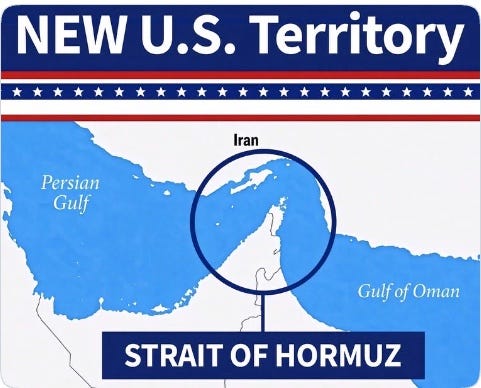
Iran’s ten-point plan includes US troop withdrawal from all regional bases, permanent Hormuz sovereignty with tolling rights, full sanctions relief, and an end to hostilities across the entire resistance axis including Lebanon. Trump’s post-ceasefire Truth Social post announced there would be “no enrichment of uranium” and that the US would help remove “all of the deeply buried Nuclear Dust.” Iran has agreed to neither formulation. The Islamabad talks begin from structurally irreconcilable positions, with each side arriving having already publicly declared the terms on which it will accept a permanent agreement. The gap between those terms has no bridging formula. The collision course has a scheduled arrival date.
Netanyahu faces an election in October 2026. His legal cases resume the moment the war emergency ends. His coalition fractures if the conflict concludes with Iran intact, Hezbollah functional and Lebanon unfinished. His only viable political legacy requires a result that permanently eliminates the Iranian threat to Israel. A two-week ceasefire in which Iran publicly declares victory on its own terms is the opposite of that result. Israel is not party to the ceasefire in Lebanon, and said so explicitly the morning after TACO 7. Israeli airstrikes on Beirut’s southern suburbs continued on Wednesday while the ceasefire was being celebrated in Tehran’s Enqelab Square. Netanyahu understands the restart sequence clearly. He may well be counting on it. He said so plainly on Wednesday morning. “This is not the end, but a station on the way to reaching our aims.” He added that Israeli strikes on Lebanon were the hardest since the 2024 beeper attack. The station metaphor is instructive. Netanyahu seems to be using the ceasefire as a platform from which to continue, not a destination at which to stop.
Trump’s framing of the entire conflict sits alongside that. On 9 March, speaking to Republican lawmakers at Mar a Lago, he described forty-one days of the most destructive US air campaign since the Gulf War as “a little excursion to get rid of some evil.” When pressed on whether it was a war or an excursion, he replied: “It’s both. It’s an excursion that will keep us out of a war.” The man who threatened to wipe out a civilisation on a Tuesday morning had previously characterised the same campaign as an ambitious day hike. Both statements are true to his understanding of it. The gap between those two framings is where the next cycle lives.
What the markets are pricing and what they should be
The relief rally is real and partially justified. Oil below $95 for the first time since the war began matters. Rate cut odds jumping overnight matters. The S&P 500 reclaiming its 200-day moving average matters. These are genuine shifts in the near-term inflation and growth outlook.
Three structural facts survive any ceasefire scenario, however, and the markets have not yet fully absorbed them.
Ras Laffan is offline for three to five years. Seventeen percent of global helium supply and a significant share of LNG capacity will not return on any timeline relevant to semiconductor manufacturers or energy markets. The commodity premium embedded in those supply chains is structural. It will persist regardless of what the Islamabad talks produce.
The Hormuz reopening will take weeks before shipping backlogs clear, war risk insurance normalises and commercial volumes resume. Iran’s Foreign Minister Araghchi chose his words carefully: safe passage “via coordination with Iran’s Armed Forces and with due consideration of technical limitations.” Araghchi is a precise diplomat. Every word in that sentence is doing work. The passage Iran has offered is managed on Iranian terms, with Iranian military coordination as the operating condition. Oil prices will not revert to pre-war levels this quarter. The Fed rate cut repricing may prove premature. A partial resumption of hostilities reverses it within hours.
The third structural fact is the one the GCC investment community is only beginning to price. I spent the better part of three decades either living in, or working across the trade and investment corridors within this region, running banks, sitting on boards, watching how Gulf capitals absorb shock and adapt. What the last forty-one days produced is categorically different from anything I observed in that time. Missiles landing on Bahrain, Kuwait, Saudi Arabia and the UAE. Desalination plants inside active targeting envelopes. Bushehr risks real. The Bahrain King Fahd Causeway closed. Airports shut. Ports ceased operations. These were not modelled risks that had been quantified, stress-tested and discounted by even the smartest risk committees in air-conditioned offices. They were lived operational realities, experienced by the families and businesses and expatriate communities of people who had assumed, with reasonable historical justification, that such things happened elsewhere. The GCC I knew was a place where serious people made serious long-term capital decisions on the basis of structural stability. That calculus has shifted. GCC sovereigns, family offices and infrastructure planners will not revert to pre-war assumptions. Capital allocation toward energy diversification, hardened water infrastructure and non-Gulf supply chains is a multi-year investment theme that the ceasefire has confirmed as urgent rather than resolved. Forty-one days proved the thesis empirically. A two-week pause does not retire it.
Four signals to watch
Hormuz AIS data. Two ships transited Wednesday morning, the first movement since the closure began. Then Israel struck Lebanon very hard. The IRGC declared a ceasefire violation, Araghchi phoned Pakistan’s army chief to register the breach, and MarineTraffic AIS showed traffic stopping again. The first signal resolved itself within twelve hours. The answer was not encouraging. Watch whether traffic resumes after the Islamabad talks or remains hostage to IDF operations in Lebanon.
IDF tempo in Lebanon. If Israeli operations intensify toward Beirut or target senior Hezbollah leadership, the timeline for an IRGC response compresses. Watch the IDF statement cadence and the target set over the next seventy-two hours.
Islamabad outcome. If Friday’s talks produce a framework communiqué both sides can characterise positively, the pause extends. The original ten-point acceptance already produced contradictory characterisations within hours. A similar pattern from Islamabad raises resumption probability sharply.
Iranian enrichment signal. Trump declared no enrichment. Iran has agreed to no such thing. The first IAEA statement or Iranian government comment on enrichment post-ceasefire will indicate whether that gap is bridgeable or whether it is the immediate trigger for the next cycle.
The Singapore official who reorganised his morning around Truth Social has plenty of company. Every central bank, every sovereign wealth fund, every senior civil servant and every portfolio manager in Asia is running the same adaptation. The traditional diplomatic architecture still exists. It has simply stopped carrying the primary signal. The signal now arrives on a platform owned by the president’s family, posted at 2:30 in the morning, moving markets before the interagency process has assembled for its first meeting.
We are living in a world that has shed its rulebook. That condition predates this conflict, will outlast this ceasefire, and will surely shape the next cycle as surely as it shaped this one.
The civilisation Trump threatened on Tuesday is fortunately still standing on Thursday. The show has been renewed. TACO 8 will arrive. The only genuine question is whether the region uses this pause and it lasts long enough to build the towards the further infra resilience that last forty-one days proved it needs.
Casting for the sequel is already underway. At the April 6 press conference, flanked by Hegseth and Caine, Trump described the muddy Iranian farmland where the rescue extraction took place as “central casting, if you were doing a movie for location.” A war in which the president evaluates extraction sites for their cinematic value is a war being run as a production. The director has already scouted the next location. The only question is where and when principal photography resumes, and whether the cameras are pointing east towards Hormuz, south towards Cuba or north towards Greenland.
Thanks for reading! Subscribe for free to receive new posts and support my work.
Join the conversation
Comments and replies take place on Substack, where Ray reads and responds.
INFINITE HORIZONS
Get each edition by email
Free. Delivered by Substack. Unsubscribe from any email.
Infinite Horizons is published by World Scientific and available now.
Buy the book